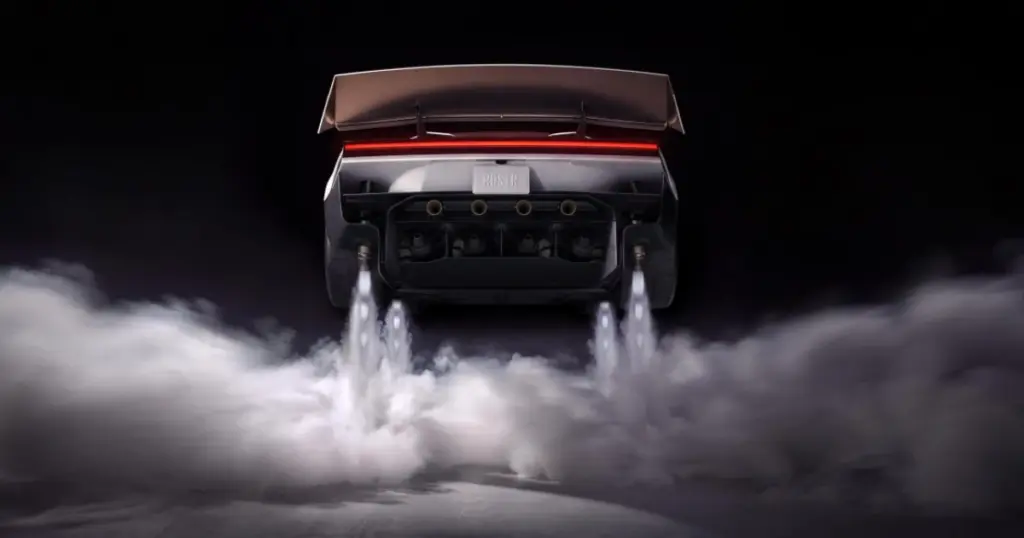
- Tesla revealed an aerial demonstration of the next-generation Roadster during an event in Waco, Texas.
- The vehicle hit 60 mph in under a second and used cold-gas thrusters to leap across an entire lineup of Tesla EVs.
- Specialists question whether the showcased prototype represents a fully drivable production car or a purpose-built stunt platform.
Airborne Display: Clearing the Full Tesla Vehicle Lineup
Tesla staged an ambitious demonstration in Waco, Texas, showcasing the next iteration of the Tesla Roadster. The electric supercar was launched from a multi-story vertical ramp, driving upside down before catching air to perform an aerial maneuver resembling a kickflip directly over a staged fleet comprising a Cybercab, a Cybertruck, a Tesla Semi, a Model Y, and a Model 3.
SpaceX Thrusters and Sub-Second Acceleration
Central to the demonstration was the vehicle’s thruster architecture. Utilizing cold-gas thruster hardware derived from SpaceX technology, the Roadster stabilized its flight trajectory and managed a controlled landing. Official figures from the event indicate that the electric supercar accelerated from 0 to 60 mph in under a single second.
| Feature / Metric | Demonstration Details |
|---|---|
| Acceleration (0–60 mph) | Under 1 second |
| Propulsion Technology | SpaceX cold-gas thrusters |
| Maneuver Executed | Vertical ramp launch, upside-down drive, mid-air roll |
| Vehicles Cleared | Cybercab, Cybertruck, Tesla Semi, Model Y, Model 3 |
| Event Location | Waco, Texas |
Production Ambition Versus Stunt Reality
While the performance delivered on long-standing promises of an airborne electric vehicle, technical observers have raised doubts regarding its day-to-day viability. Questions remain as to whether the vehicle presented on the Waco test grounds serves as a road-legal, human-drivable production model or an experimental engineering demonstration.
While the integration of SpaceX cold-gas propulsion pushes high-performance EV limits, vehicle safety regulators will face unprecedented challenges before any commercial road vehicle with jet-style thrusters can hit public streets.



A sub-second jump makes for great PR, but integrating cold-gas thrusters into a street-legal car presents a massive regulatory nightmare. Between pedestrian safety risks, high-pressure vessel maintenance, and prohibitive insurance costs, this feels far closer to an expensive Hollywood stunt than a practical production reality.