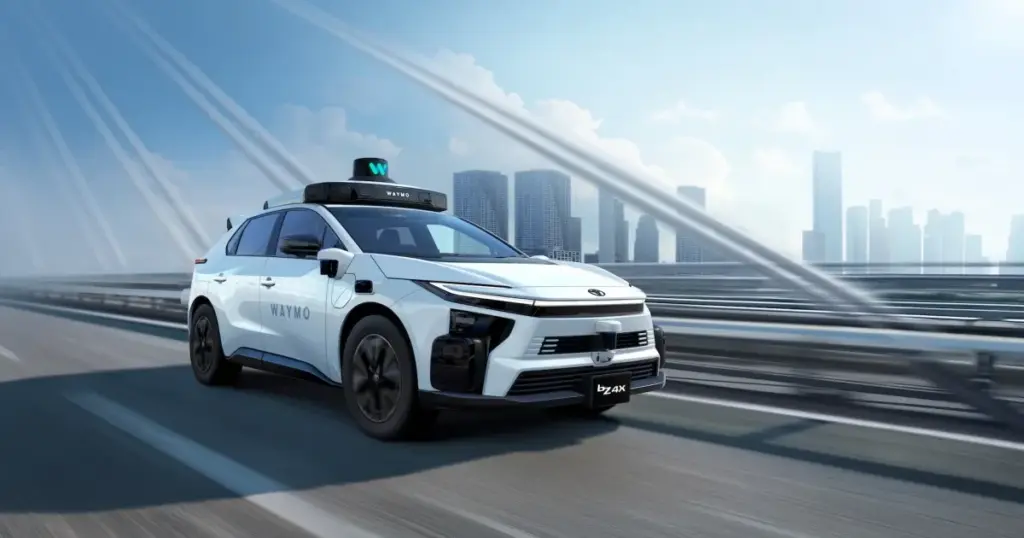
- Waymo will commence testing of self-driving Toyota bZ4X electric vehicles in Japan starting in 2027.
- The robotaxis will be purpose-built at Toyota’s Takaoka plant in Japan for deployment in Tokyo.
- The partnership signifies Waymo’s expansion into new markets, with future plans for the UK following Japan.
Waymo and Toyota Strengthen Strategic Alliance for Autonomous Mobility
Waymo, Alphabet’s autonomous driving technology company, and Japanese automaker Toyota are significantly expanding their strategic partnership, initially announced in April 2025. Under this collaboration, Waymo is set to begin testing self-driving versions of Toyota’s electric bZ4X vehicles in Japan next year, with full robotaxi services anticipated to launch in Tokyo in 2027.
Production and Market Rollout
The driverless bZ4X electric SUVs will be specifically assembled for Waymo at Toyota’s Takaoka plant in Japan. The initial focus will be on testing and deployment within the Japanese market, with subsequent plans for expansion into the United Kingdom. Specifics regarding the number of robotaxis Toyota will produce have not been disclosed by either company.
The launch of a robotaxi service in Tokyo by 2027 underscores the long-term vision of both companies in the autonomous transportation sector. This move also highlights the increasing global interest in self-driving technologies. Such initiatives are part of a broader trend of technological advancement, similar to how Google recently dismantled a 1.3 million-device Android botnet.
| Event | Date/Year | Location |
|---|---|---|
| Strategic Partnership Announcement | April 2025 | Global |
| bZ4X Testing Commencement | 2027 | Japan |
| Robotaxi Service Launch | 2027 | Tokyo, Japan |
| Future Expansion | Post-2027 | United Kingdom |
For consumers and urban infrastructure, this partnership signals the potential introduction of new, safe, and efficient transportation services. For the automotive and technology industries, it represents a significant step towards the mainstream adoption of autonomous vehicles, showcasing deep integration between AI developers and traditional car manufacturers. The expansion into new markets like Japan and the UK indicates the global nature of this transformation and the growing competition in the autonomous driving sector.



The Waymo-Toyota collaboration, particularly the bZ4X deployment in Tokyo by 2027, marks a critical inflection point for Level 4 autonomy. Integrating Waymo’s established Driver with Toyota’s manufacturing scale and access to complex urban environments like Tokyo presents a formidable market entry strategy. The choice of the bZ4X EV platform also suggests an emphasis on sustainability and lower operational costs, crucial for scaling robotaxi services.