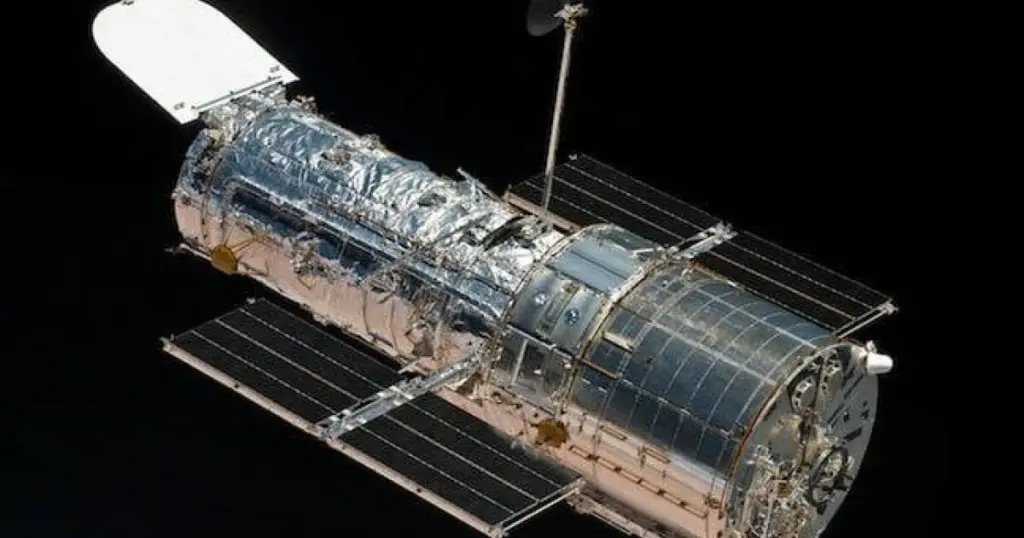
- NASA has issued a Request for Information (RFI) to commercial entities for potential Hubble Space Telescope missions.
- Options include orbital reboost, performance enhancement, or controlled deorbit by 2032.
- Without intervention, there is a 50% chance of an uncontrolled Hubble reentry by December 2033.
Hubble Space Telescope’s Future Hangs in the Balance as NASA Seeks Commercial Aid
NASA has released a contract opportunity notice, a Request for Information (RFI), inviting commercial space organizations to propose solutions for the Hubble Space Telescope (HST). Despite its 36 years in orbit and continued scientific output, Hubble’s orbit is steadily decaying, presenting a risk of uncontrolled atmospheric reentry.
The Challenge of Hubble’s Declining Orbit
The last servicing mission for Hubble, STS-125, was launched on May 11, 2009. While it was hoped to extend the observatory’s life by five years, Hubble has remarkably continued to deliver science for almost 17 years. However, its operational lifespan is nearing its end. NASA estimates a 10 percent chance of reentry by September 2032, escalating to a 50 percent chance by December 2033. As Hubble lacks a propulsion system, any reentry without intervention would be uncontrolled. Given its substantial mass, an uncontrolled reentry poses a remote but significant risk to populated areas on Earth.
Proposed Mission Options
The RFI, which has a response deadline of November 30, seeks ideas for missions to be executed by 2032 without harming the telescope. The agency is exploring several options:
- Orbital Reboost: Elevating Hubble’s orbit to at least 600 km (373 miles) to significantly extend its operational lifetime.
- Performance Enhancement: Augmenting the telescope’s ongoing performance and increasing its resilience and expected on-orbit lifespan through servicing.
- Controlled Deorbit: Grappling the observatory to perform a controlled reentry and disposal, mitigating risks associated with an uncontrolled descent.
A soft-capture mechanism installed during the STS-125 mission is expected to facilitate easier docking for any potential servicing or deorbiting vehicle. Companies like Northrop Grumman, with their Mission Extension Vehicle (MEV) technology, demonstrate existing capabilities for on-orbit servicing, though Hubble presents a greater challenge.
Hubble’s Enduring Scientific Value
Even with the advent of the James Webb Space Telescope (JWST) and the upcoming Nancy Roman Space Telescope, Hubble remains in high demand, with NASA reporting a 7:1 oversubscription for its observation time. No direct replacement for Hubble, such as the Habitable Worlds Observatory (HWO), is anticipated before the 2040s. Previous proposals, like a SpaceX mission advocated by Jared Isaacman, then a private citizen, to boost Hubble, were rejected but similar plans could now be revisited.
NASA’s outreach to commercial space industry for Hubble’s future signifies a pivotal moment for public-private partnerships in space exploration. A successful mission, whether it extends Hubble’s life or ensures its safe disposal, will not only safeguard a valuable scientific asset but also establish precedents for future satellite life extension and decommissioning, impacting how critical space infrastructure is managed globally. This move could also stimulate innovation within the commercial space sector for complex on-orbit operations.



I’ve been following the discussions around Hubble’s future closely, especially after the initial SpaceX proposal. It’s fascinating to see NASA actively seeking commercial solutions now. I really hope they go with an orbital reboost; extending its operational life would be incredible given its continued scientific output. The soft-capture mechanism sounds promising for making docking easier, which is a big plus. My main concern is the cost and feasibility of actually getting a mission off the ground quickly enough. A practical tip: keep an eye on the commercial space companies like Northrop Grumman, as their existing MEV tech makes them a strong contender.