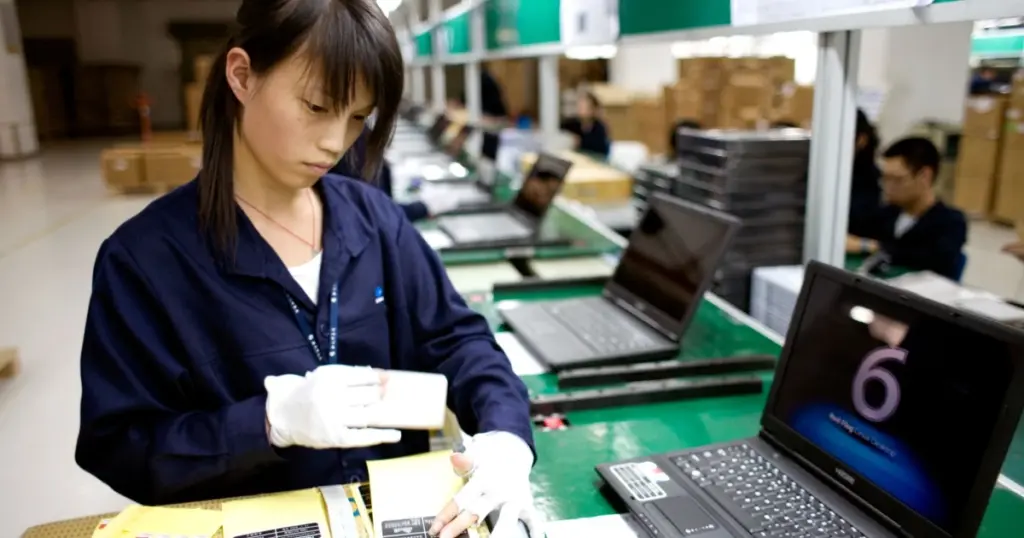
- Major PC manufacturers, including HP, Asus, and Acer, are relocating some production capacity back to China.
- This move is driven by soaring component costs, particularly for memory and PCBs, fueled by intense AI industry demand.
- The return to China is necessitated by its established supply chains and lower operational costs, despite previous diversification efforts.
PC Makers Return to China as AI Demand Drives Up Component Costs
Leading global personal computer manufacturers, including HP, Asus, and Acer, are reportedly shifting some of their manufacturing capacity back to China. This strategic reversal is a direct consequence of escalating component costs, primarily driven by the unprecedented demand from the artificial intelligence industry. According to Nikkei Asia, the increasing bill-of-materials costs have made China’s experienced workforce, relatively lower prices, and established supply chain ecosystem a more attractive option.
Previously, in 2024 and 2025, many PC brands had gradually moved production out of China due to rising U.S. sanctions and tariffs, which increased prices and compelled them to seek friendlier nations. While these new regions, predominantly in Southeast Asia, lacked China’s established supply chains and expertise, they offered risk diversification against geopolitical tensions. However, the current component price surge has forced a reevaluation of these strategies.
AI-Induced Price Hikes Across Key Components
The primary culprit behind this shift is the AI-induced shortage of memory and storage chips, which has caused memory prices to climb an unprecedented 500% in just 12 months. Beyond memory, other critical parts like Printed Circuit Boards (PCBs) and the fiberglass cloth used in motherboard manufacturing are experiencing significant price increases. Acer chairperson and CEO Jason Chen noted that suppliers appear to be capitalizing on shortage fears to protect their margins. Lead times for some PCB orders have stretched to as long as 30 months, with order books for related materials filling up until 2030.
| Component | Price/Lead Time Change | Driving Factor |
|---|---|---|
| Memory Chips | +500% in 12 months | AI industry demand, shortage |
| Printed Circuit Boards (PCBs) | Lead times up to 30 months | AI industry demand, capacity crunch |
| Copper Clad Laminates (CCLs) | +1200% since July | AI industry demand, material shortage |
New Partners and China’s Supply Chain Advantages
Instead of returning to traditional suppliers like Foxconn, who have largely redirected their production capacity towards AI data centers, PC manufacturers are signing contracts with smaller Chinese contract manufacturers. Companies such as Luxshare, Huaqin Technology, and Longcheer Technology are actively trying to establish themselves in PC manufacturing, offering new partnership opportunities.
These Chinese contract manufacturers also provide better access to domestically produced memory chips, such as those from CXMT. A supply chain manager in the computer ecosystem told Nikkei Asia that these manufacturers are actively marketing themselves as a viable option for securing better access to Chinese-made memory chips and helping to sort out supply chain complexities. For example, ensuring critical components access is a key selling point.
While tech companies are not abandoning their “China+1” diversification strategy entirely, the mature industrial ecosystem in China is proving crucial in offsetting increased component costs. However, this move negatively impacts the newly established supply chains in Southeast Asia. One manager at a PC component supplier lamented that two new production lines built in Thailand for PC clients have not yet turned profitable due to substantial orders being moved back to China, leaving their future uncertain.
For consumers and businesses, this strategic shift by PC manufacturers may help maintain competitive pricing in the short term, as companies seek to mitigate the impact of global component price inflation. However, it also highlights the increasing reliance on Chinese manufacturing, potentially reintroducing geopolitical risks in the long run. For the industry, it underscores the profound influence of the AI sector on global supply chains and the imperative for rapid adaptation to dynamic market conditions.



The article accurately highlights the critical impact of AI-driven component cost escalations, particularly the 500% surge in memory and extended PCB lead times, on PC manufacturing strategies. This strategic pivot back to China underscores the unparalleled efficiency of its integrated supply chain ecosystem, despite prior diversification efforts. The reliance on domestic memory suppliers like CXMT by smaller contract manufacturers further illustrates a recalibration of global tech supply dynamics.