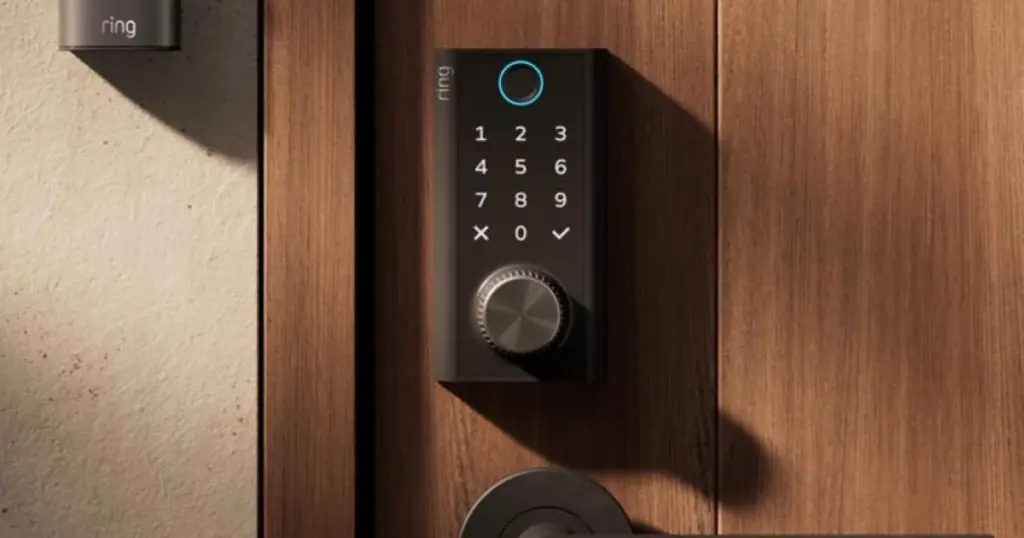
- Amazon-owned Ring has officially entered the smart lock market with a device designed to address a common concern among users: being locked out due to a dead battery.
- A standout feature of Ring’s inaugural smart lock is its integrated manual charging system.
- This development positions the Ring Smart Lock as a thoughtfully engineered solution, offering enhanced peace of mind and practicality for homeowners.
Ring Enters Smart Lock Market with Innovative Power Solution
Amazon-owned Ring has officially entered the smart lock market with a device designed to address a common concern among users: being locked out due to a dead battery. Unlike many existing smart locks that rely on hidden USB ports or metal contacts for 9-volt battery connections to replenish power, the new Ring Smart Lock introduces a novel approach to emergency power.
Manual Dial Charging Mechanism
A standout feature of Ring’s inaugural smart lock is its integrated manual charging system. Should the rechargeable battery unexpectedly deplete while a user is away from home, the device allows for power restoration by simply turning a dial. This innovative mechanism eliminates the need for a physical backup key, ensuring continuous access and mitigating the inconvenience associated with unforeseen battery failures.
Benefits of Ring’s New Smart Lock
- Reliability: Guarantees access even when the primary battery is fully discharged.
- Convenience: Removes the dependency on backup keys or external power sources for emergency charging.
- Innovation: Sets a new benchmark in smart lock design by focusing on user experience and critical problem-solving.
This development positions the Ring Smart Lock as a thoughtfully engineered solution, offering enhanced peace of mind and practicality for homeowners.



While the hand-crank charging for Ring’s new smart lock is certainly innovative, I have to wonder about its real-world practicality. How much cranking will be needed to generate enough power for a single unlock, especially in an urgent situation? It sounds like a clever workaround, but I’m skeptical it fully addresses the core issue of battery reliability without adding a potentially cumbersome step. I also question the long-term durability of such a mechanism.