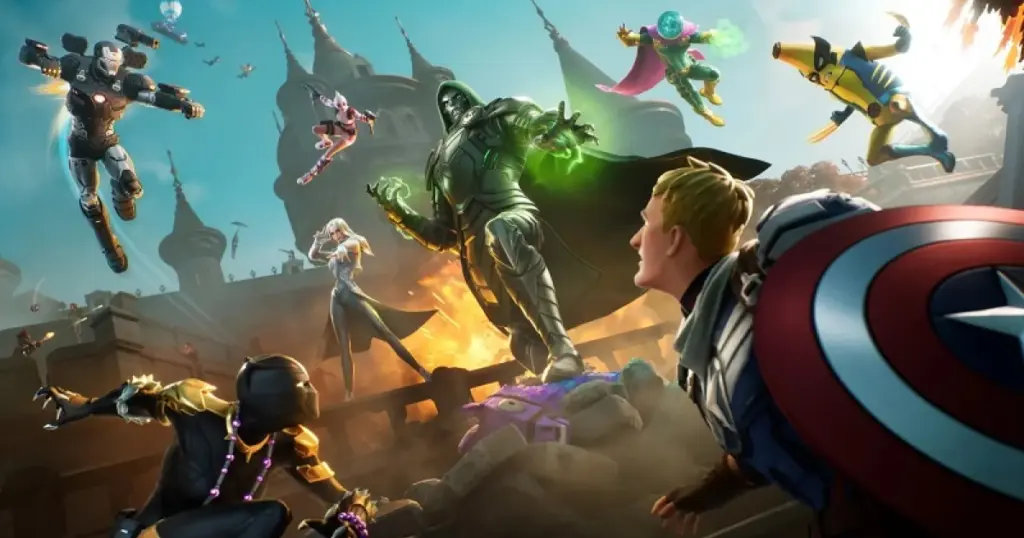
- Epic Games has indefinitely delayed its collaborative Disney, Marvel, and Star Wars shooter.
- The studio is pivoting to an “AI-first” development strategy, utilizing models like Anthropic’s Claude.
- Human engineers are moving away from manual coding to focus on guiding and verifying AI-generated code and assets.
A Radical Pivot to Fully Automated Code and Art
Epic Games is significantly overhauling its game development pipelines by mandating an “AI-first” development methodology. According to an extensive report from Bloomberg citing people familiar with the matter, the Fortnite creator intends to rely entirely on generative artificial intelligence to produce the programming codebase and visual artwork for its high-profile collaboration with The Walt Disney Company.
Internal communications reviewed by Bloomberg reveal a dramatic directive to development teams: “no more hand-written code.” Under the new framework, engineers and digital artists will serve as supervisors tasked with prompting, steering, and reviewing assets created through automated pipelines. Anthropic’s Claude has been specifically highlighted as one of the primary AI models leveraged to write code and streamline production.
The $1.5 Billion Disney Partnership Faces Delays
Announced in early 2024, the massive $1.5 billion partnership between Epic Games and Disney was aimed at creating a major shooter experience featuring beloved franchises from Marvel and Star Wars. Internal planning initially pegged the title for a March 2027 release window.
| Parameter | Original Strategy | Updated Status (Bloomberg Report) |
|---|---|---|
| Deal Investment Value | $1.5 Billion | $1.5 Billion |
| Targeted Launch Window | March 2027 | Delayed Indefinitely |
| Development Approach | Standard developer programming | “AI-first” mandate (no manual code) |
| Primary AI Stack Mentioned | Unspecified | Anthropic’s Claude |
| Root Causes of Delay | Standard roadmap | Understaffing, slower progress, AI workflow transition |
The pivot toward complete AI acceleration comes alongside internal friction. According to Bloomberg’s reporting, the project had already suffered from an understaffed team and slower-than-anticipated production velocity. Paired with the structural shift to automated workflows, the studio chose to pull the title from its original schedule without committing to a revised launch date. This pivot parallels Disney’s broader technological moves across the digital entertainment landscape, including moves highlighted when Character.AI sold its assets to Disney for $20M.
Epic’s dramatic mandate signals that the gaming industry is treating generative models not just as copilot assistants, but as primary production engines. For software engineers and technical artists, this shift reinforces the necessity of moving from syntax implementation to prompt orchestration, systemic quality assurance, and architecture validation.



A strict mandate of ‘no more hand-written code’ sounds far too reckless for a complex multiplayer shooter. Debugging subtle architecture and networking issues in purely generated code often costs more time than writing it properly from scratch. I fear this delay is only the first of many hurdles.