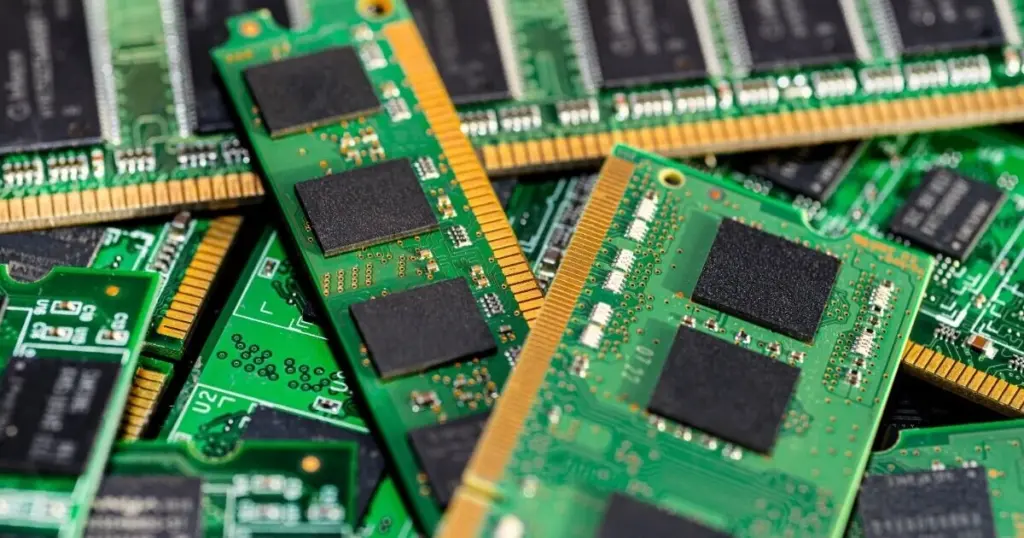
- AMD has unveiled MEXT, an AI-powered predictive memory technology for EPYC servers that enables NVMe SSDs to act as a DRAM tier, significantly reducing expensive memory requirements.
- MEXT can deliver up to 99% of system performance with half the DRAM, potentially cutting overall server costs by as much as 83%.
- The technology is exclusive to AMD EPYC hardware, with initial deployments on 145 systems saving an estimated $5 million in DRAM costs, and a broader rollout planned.
AMD has detailed its MEXT technology, an AI-powered solution acquired this summer, designed to optimize memory utilization in EPYC server environments. This innovation allows flash memory, such as NVMe SSDs, to function as a tiered extension of DRAM, substantially reducing the demand for costly RDIMM modules.
Revolutionizing Memory Management with AI
At the core of MEXT is a predictive AI engine that intelligently manages the movement of memory pages between DRAM and more economical flash storage. According to Gary Smerdon, former Mext CEO and now CVP of business development at AMD, this technology could cut enterprise server costs by up to 83%.
MEXT employs a suite of machine learning algorithms, notably a transformer derivative model similar to those found in large language models. However, instead of predicting the next word, MEXT’s model predicts which memory page will be required next. This enables the system to offload infrequently accessed pages to flash and proactively retrieve them into DRAM before the operating system or applications need them.
GPU-Free AI Training
The AI models within MEXT train on a single EPYC core in under one second, eliminating the need for a GPU. The model then continuously refines and retrains itself over time, adapting to specific workloads. This approach ensures that virtually any EPYC customer can leverage the software platform effectively.
Performance and Cost Efficiency
AMD states that MEXT can achieve up to 99% of system performance while using only half the DRAM. For instance, in Apache Spark workloads, 99% performance is observed with half the DRAM replaced by flash. During tests with Synopsys’ PrimeTime EDA suite, a 50% DRAM reduction maintained 95% performance, while a configuration with 25% DRAM and 75% flash still yielded 80% of the DRAM-only baseline performance.
| Application | DRAM Configuration | Performance (vs. Baseline) |
|---|---|---|
| Synopsys PrimeTime EDA | 50% DRAM, 50% Flash | 95% |
| Synopsys PrimeTime EDA | 25% DRAM, 75% Flash | 80% |
| Apache Spark SQL (3-Node Cluster) | 50% DRAM, 50% Flash | 99% |
| Agentic AI (5 Agents Geomean) | 50% DRAM, 50% Flash | 99% |
| Agentic AI (5 Agents Geomean) | 25% DRAM, 75% Flash | 85% |
| Agentic AI (Memory-Hungry Agent) | 50% DRAM, 50% Flash | 90% |
| Agentic AI (Memory-Hungry Agent) | 25% DRAM, 75% Flash | 88% |
Across the initial 145 server systems where MEXT software has been deployed, customers have already saved an estimated $5 million in avoided DRAM costs. AMD plans to expand its internal deployment to 2,000 servers next year.
Rollout and Ecosystem Integration
AMD is currently in the first phase of its MEXT rollout, collaborating with OEM partners like HPE to ensure systems are ‘Mext ready’. The second phase will involve selling software licenses and shipping EPYC platforms with the RAM View application preinstalled. For Linux systems, only a kernel driver is required. It is important to note that, unlike many of AMD’s offerings, MEXT is not open-source.
This initiative aligns with the broader industry trend of leveraging AI for infrastructure optimization, a particularly relevant development amid ongoing memory shortages and rising prices.
AMD’s MEXT technology offers significant operational cost reductions for data centers and enterprise clients utilizing EPYC servers by drastically lowering the need for expensive DRAM. This could be a critical solution amidst the persistent memory shortages driven by AI datacenter buildouts. For businesses, it translates into the potential to deploy more powerful systems with lower capital expenditures and reduced power consumption, all while maintaining high performance across diverse workloads, from EDA to databases and agentic AI.


The MEXT technology sounds incredibly promising for server efficiency! I’m particularly fascinated by how a transformer derivative model predicts memory page requirements instead of words. Could this predictive AI be adapted for other resource management challenges beyond memory, perhaps in CPU scheduling or network traffic optimization? Also, I’m curious about the long-term impact on NVMe SSD lifespan when constantly used as a DRAM tier—are there specific endurance considerations AMD has addressed?