- Jensen Huang has resigned as Nvidia CEO following multiple alleged affairs and scandals.
- Former President Donald Trump publicly endorsed Tim Cook, ex-Apple CEO, as Huang’s replacement.
- Nvidia’s stock saw an initial dip of over 10% post-announcement but largely recovered.
Jensen Huang’s Resignation and the Search for a Successor
Jensen Huang has resigned as CEO of Nvidia, a leading company in the artificial intelligence sector, following a series of scandals. Nvidia’s board of directors announced Huang’s resignation on Wednesday, appointing Colette Kress, Executive Vice President and Chief Financial Officer, as Interim CEO. Huang’s departure comes after revelations of an extramarital affair with a Megaspeed executive suspected of being a Chinese intelligence asset, and a further affair with Nvidia Vice President of Health Care, Kimberly Powell.
The search for a permanent successor is now underway, with various names being floated. Internal candidates include Nvidia’s current CTO, Michael Kagan. External candidates mentioned include Intel’s CEO Lip-Bu Tan, AMD’s CEO Lisa Su, Arm’s CEO Rene Haas, and even Tesla and SpaceX CEO Elon Musk.
Donald Trump’s Endorsement of Tim Cook
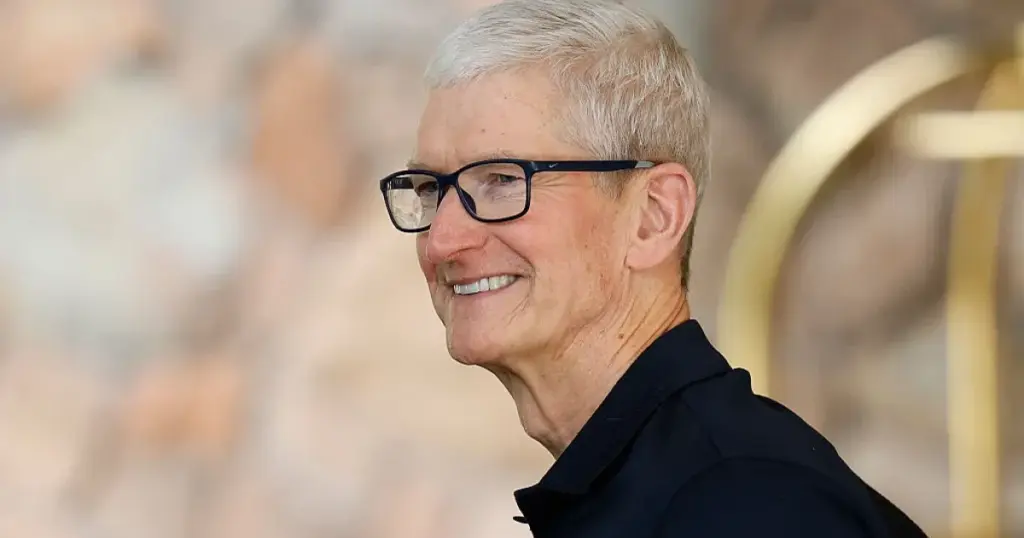
Former U.S. President Donald Trump, via his Truth Social platform, asserted that only one man could fill Huang’s shoes: Tim Cook of Apple. Trump stated, “NOW THAT Nvidia CEO JENSEN HUANG, who has done a fantastic job, has resigned, there is only one man to take his place - TIM COOK of Apple. A Legend replaces a Legend! President DONALD J. TRUMP.”
Tim Cook, who served as Apple’s CEO from 2011 to 2026 and is currently the Executive Chair of Apple’s board, is recognized for his successful leadership and expansion of Apple’s product categories, including the launch of Apple Music, Apple TV, Apple Watch, and AirPods.
Market Reaction and Congressional Scrutiny
Following the announcement of Huang’s resignation, Nvidia’s share price plunged more than 10 percentage points at the market open on Wednesday. However, it recovered much of that ground as traders capitalized on the dip. The company is scheduled to report its third-quarter fiscal 2027 financial results next week, on Tuesday, November 17.
Huang’s resignation has also drawn congressional attention. The Select Committee on the CCP has summoned Jensen Huang to appear, threatening a subpoena if he does not voluntarily agree to attend a closed-door meeting. Reports allege that U.S. intelligence believed Huang was the target of a Chinese honeypot operation and that President Trump was briefed but chose not to act, reportedly to avoid affecting Nvidia’s sales or antagonizing China. This news comes as other tech giants, like Qualcomm, are also re-evaluating their strategies, as seen in the recent report, Qualcomm Announces Global Job Cuts Amid Strategic Pivot to AI and Edge Computing.
The Relationship Between Trump and Cook
Donald Trump and Tim Cook share a longstanding professional relationship. Cook reportedly donated $1 million to Trump’s inauguration. Earlier this year, Trump included both Jensen Huang and Tim Cook on a trip to China for negotiations with the Chinese government to foster trade relations concerning AI hardware. This relationship could be a significant factor in Nvidia’s future, given the company’s current political and economic landscape.
Jensen Huang’s resignation and the potential appointment of Tim Cook as Nvidia’s CEO could significantly reshape the company’s trajectory at the heart of the AI boom. This decision will influence Nvidia’s strategy regarding the global AI market, its relationship with China, and its standing amidst increasing political and economic pressures. For investors and partners, this signals a period of uncertainty and potential shifts that could either stabilize or reconfigure market expectations.

The idea of Tim Cook stepping into Nvidia’s CEO role is certainly intriguing, especially given his track record at Apple. I wonder how his leadership style, which is often associated with supply chain optimization and services growth, would translate to a company primarily focused on AI hardware and software innovation. Also, the mention of the alleged Chinese ‘honeypot’ operation and Trump’s inaction is quite alarming. What could be the long-term implications of such an incident on U.S. tech security and corporate leadership? I’d love to hear others’ thoughts on this.