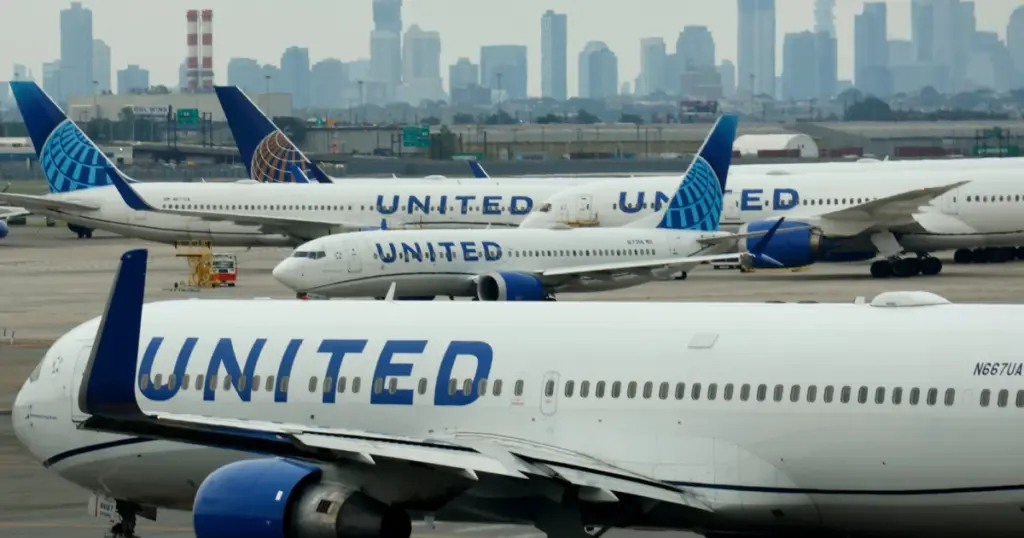
- United Airlines has prohibited the use of third-party AI agents for flight bookings and account management.
- The airline cites security risks, potential violations of federal aviation regulations, and customer data protection concerns.
- This move aligns with similar actions taken by major banks and retailers to safeguard customer privacy and security.
United Airlines Restricts AI Agent Usage
United Airlines has announced a ban on the use of third-party artificial intelligence agents for booking flights on behalf of passengers and interacting with its systems. The airline stated that such actions could pose significant security risks, potentially violate federal regulations, and compromise sensitive customer data.
According to United, these restrictions cover both its direct digital platforms and indirect access through travel agencies and aggregators, with changes implemented across its booking, ticketing, and distribution policies. While United has not yet observed widespread attempts to use AI agents for bookings, the company is taking proactive measures.
United Airlines’ Core Concerns
United Airlines highlighted several key reasons for its decision:
- Security and Data Privacy Risks: Sharing account credentials with personal, third-party AI assistants can expose sensitive information, leading to unintended purchases, account changes, or unauthorized use of MileagePlus miles.
- Violation of Federal Aviation Regulations: Automated actions could contravene aviation rules. For instance, check-in processes require a human acknowledgment that bags contain no banned substances, a confirmation a bot cannot adequately provide.
- Unintended Actions: AI agents might make unforeseen purchases or account modifications without a full understanding of the context, potentially resulting in financial losses or incorrect bookings.
The airline also expressed a preference for customers to use its own application for interacting with its services rather than deploying third-party AI assistants.
Industry-Wide Trend
United Airlines is not alone in implementing such measures. Major banks in both the US and the UK have previously moved to block third-party AI agents from operating within customer accounts. In September, Amazon also took action against unauthorized AI agents, blocking Meta’s Muse. United emphasized, “Corporate leaders in the banking and retail industries have taken similar actions regarding AI agents and we encourage others to consider measures that preserve the data and security of their customers and strengthen safety.”
Incidents such as British mathematician Professor Hannah Fry’s cautionary experiment, where an AI agent made ill-considered purchases after being given access to a bank card, underscore the potential risks. While AI agents are rapidly improving, their deployment necessitates careful oversight.
In the broader context of AI development, many companies, including Qualcomm, are shifting their focus towards AI and edge computing, making security and regulatory compliance even more critical.
For United Airlines passengers, this means that any use of AI agents to automate booking or account management will be prohibited. Users are advised to interact directly with the airline’s official platforms. For AI developers and service providers, this underscores the necessity of creating regulated and transparent solutions that adhere to stringent security and data privacy requirements in critical sectors like air travel.


This is a fascinating move by United, especially considering the rapid advancements in AI. I’m curious about the specific federal aviation regulations they’re most concerned about being violated beyond the bag acknowledgment. Could an AI agent, if properly audited and certified, ever be deemed compliant? Also, how does United plan to differentiate between a sophisticated bot and a human user, especially as AI becomes more integrated into everyday tools? I’d love to hear others’ thoughts on the technical challenges of enforcing this ban.