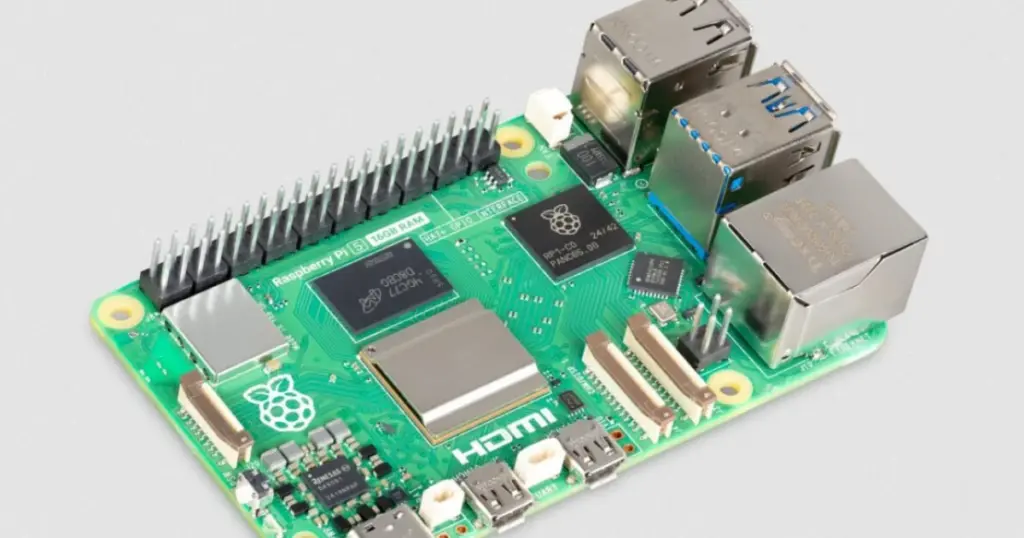
- The 16GB Raspberry Pi 5 has seen an $80 price increase, bringing its cost to $385.
- This is the latest in a series of hikes attributed to ongoing RAM shortages and rising memory costs.
- The current price is over triple its original launch price of $120 in January 2025.
Raspberry Pi 5 16GB Configuration Sees Another Significant Price Increase
PROSTO24 reports that Raspberry Pi has announced its latest round of price adjustments, with the 16GB Raspberry Pi 5 now costing $385. This represents an $80 increase and marks another escalation in pricing driven by persistent RAM shortages and escalating memory costs affecting the technology industry.
Eben Upton, CEO of Raspberry Pi, confirmed the price hike, stating it is an “unavoidable” consequence of “the steep rises in the cost of memory over the past two years.” He noted that other computer manufacturers have faced similar challenges and emphasized Raspberry Pi’s efforts to minimize the impact on customers. The new pricing for the 16GB Raspberry Pi 5 is effective immediately.
Detailed Price Changes and Affected Models
The 16GB Raspberry Pi 5 launched at $120 in January 2025, meaning its price has now more than tripled in less than two years. In addition to the flagship single-board computer, the 16GB version of the Raspberry Pi Compute Module 5 (CM5) has also increased by $40. However, the Raspberry Pi 500+ all-in-one desktop, which also features a 16GB model, has been spared from this particular price adjustment, although it already carries a higher price tag.
| Model | Launch Price | Current Price | Price Change |
|---|---|---|---|
| Raspberry Pi 5 16GB | $120 | $385 | +$265 |
| Raspberry Pi CM5 16GB | $135 | $425 | +$290 |
| Raspberry Pi 500+ 16GB | $199 | $485 | No Change |
This latest adjustment comes barely a month after Raspberry Pi raised prices on its 2GB Raspberry Pi 4 and Raspberry Pi 5 models by $12.50 each, bringing them to $67.50 and $77.50, respectively. Notably, 1GB devices have not seen recent price increases.
Market Impact and User Recommendations
The repeated price hikes are significantly altering the landscape for hobbyists and makers. Historically, Raspberry Pi devices were designed with strict budget constraints, famously targeting a $25-$35 price point for many years. With some configurations now approaching $400 or $500, the core Raspberry Pi business is facing pressure from simpler microcontrollers like Picos and ESP32 boards for small projects, and entry-level x86 SBCs or mini PCs for more ambitious tasks. Mini PCs, in particular, offer more powerful CPUs, GPUs, NPUs, and greater flexibility and expandability.
Upton advises customers unwilling to pay nearly $400 for a single-board computer to consider models with less RAM, utilize older Pi versions, or optimize applications to function with reduced memory. He also issued a warning against unauthorized sellers exploiting the shortages by offering inflated prices or misleading products, urging customers to purchase only from approved resellers. This situation highlights the importance for users to ensure they are not overpaying for memory they do not need, a sentiment echoed by the Raspberry Pi blog.
Despite these increases, Raspberry Pi maintains that the current memory landscape is temporary and they look forward to rolling back prices when memory costs decline. However, warnings from industry players like Micron suggest that memory shortages could persist until 2028 or beyond, indicating that a return to the original $120 price for the 16GB Raspberry Pi 5 may not be imminent.
The continuous price escalation for the 16GB Raspberry Pi 5 necessitates a re-evaluation of project strategies for makers and developers. For cost-sensitive or less memory-intensive applications, alternatives such as the Raspberry Pi Pico, ESP32 boards, or even the 2GB versions of the Pi 4/5 could be more economically viable. For projects demanding higher performance and substantial RAM, entry-level mini PCs or x86 single-board computers are increasingly becoming competitive options, offering superior processing power and flexibility. This trend also underscores the growing importance of software optimization to operate efficiently with less memory.


While the RAM shortage explanation for the Pi 5’s price hike to $385 is understandable, it does make one question the original $120 launch price. Was it truly sustainable, or was it an initial hook? For nearly $400, many users might find more robust, off-the-shelf mini PCs or even entry-level x86 SBCs offering better value and performance for their projects, especially considering the ecosystem limitations of a Pi. It really shifts the value proposition significantly.