- iFixit’s teardown of the new MacBook Pro with PROLED XDR Display reveals a repairability score of 5 out of 10.
- The new model is 92g lighter due to a redesigned aluminum chassis and saves 101g in the display assembly.
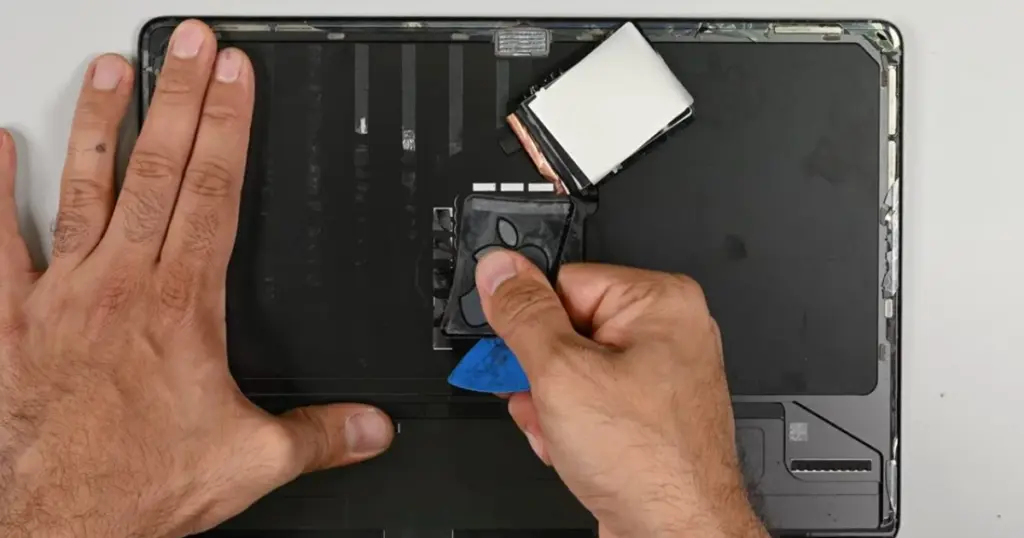
- The re-introduced glowing Apple logo now utilizes a strip of LEDs and a diffuser, differing from previous backlight methods.
PROSTO24 reports: iFixit has published its comprehensive teardown of the new Apple MacBook Pro with PROLED XDR Display, which was unveiled at the end of October. The analysis provides key insights into the device’s construction, including the mechanism behind the re-introduced illuminated Apple logo, as well as improvements and persisting challenges regarding its repairability.
Design Features and Repairability Assessment
The new MacBook Pro PROLED received a repairability score of 5 out of 10 from iFixit, a one-point improvement over the previous M5 MacBook Pro model. This gain is attributed to certain design enhancements, despite the overall complexity typical of Apple devices.
Positive Aspects:
- Lid Assembly: The entire lid comes off relatively easily. Its three-screw hinges closely resemble those on the M6 14-inch MacBook Pro, and streamlined display cable brackets simplify removal.
- Repair Assistant Tool: Apple’s Repair Assistant tool demonstrated effective handling of a full system board swap. Testing showed that when a touchscreen from one machine was paired with a logic board from another, the system correctly recognized the battery, display, and Touch ID sensor, with touch control requiring no separate calibration.
Negative Aspects:
- Panel Replacement: Replacing the OLED panel alone proved impossible. When iFixit attempted to separate it from the lid, the glass delaminated, cracking the OLED and touch-sensitive layers beneath. This could lead to significantly costlier repairs.
- Internal Layout: The internal layout of the PROLED is similar to the last few models of MacBook Pros, with fans, board, speakers, and trackpad all in the same places. This means familiar repair annoyances persist:
- USB-C ports, the headphone jack, and fans require the system board to be removed first.
- The HDMI port, SDXC card reader, storage, and memory are all soldered directly to the board.
- Battery Pack: The battery pack is difficult to remove, though it is at least removable, unlike in many thin-and-light laptops.
The Return of the Illuminated Apple Logo
A notable feature of the new model is the return of the glowing Apple logo on the lid, a welcome addition for many Apple enthusiasts. Unlike older MacBooks, which borrowed light from the LCD backlight shining through an apple-shaped window, the new model employs a different technology.
- Illumination Mechanism: The logo’s illumination is achieved by a strip of LEDs along one edge of the logo, with light passing through a diffuser for an even glow.
- Repair Challenge: Because this component sits behind the display panel, it would be nearly impossible to repair if it failed, especially if the panel is destroyed during removal.
PROLED XDR Display and Weight Reduction
The new MacBook Pro is the first in the lineup to feature OLED technology and introduce touch capability. Significant weight reductions have also been achieved:
| Model | Weight (kg) | Weight Change (kg) |
|---|---|---|
| 16-inch PROLED | 1.82 | -0.32 (from 2.14 kg predecessor) |
| 14-inch PROLED | 1.38 | -0.22 (from 1.60 kg M5 Pro) |
The weight savings are attributed to several factors:
- Aluminum Chassis: 92g lighter.
- Display Assembly: 101g lighter, despite being touch-enabled.
- Battery: 2g lighter.
Under a microscope, the PROLED XDR display looks very different from earlier MacBooks: the blue subpixel is significantly larger than the green and red ones. This design choice addresses the faster wear rate of blue OLED materials, allowing a larger subpixel to emit the same amount of light with less strain on the material, thereby extending display lifespan. In related news, Apple recently announced the closure of its Apple Support Community forums.
For users and repair professionals, the new MacBook Pro PROLED presents a mixed bag. While some components, like the lid assembly, are more accessible for replacement, core elements such as the OLED panel and numerous ports still involve complex procedures and could lead to costly repairs. The return of the illuminated logo is a welcome aesthetic touch, but its repairability in case of failure will be extremely challenging. The weight reduction and introduction of a touchscreen OLED display enhance the user experience, but repairability remains a critical consideration for the device’s long-term usability.


While the improved repairability score is a step in the right direction, a 5 out of 10 still leaves much to be desired, particularly if replacing the OLED panel alone is impossible without damaging other components. This suggests that while some elements might be easier to access, core repairs remain prohibitively expensive. The soldered components are also a persistent concern for longevity and sustainable use. It feels like a minor improvement masking significant underlying repair challenges.