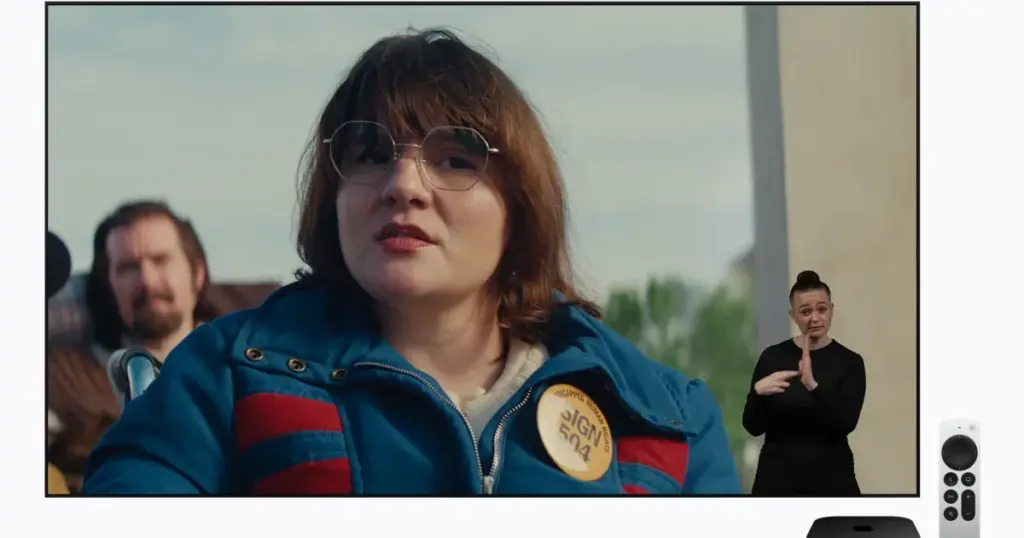
- Apple TV+ has rolled out a new accessibility feature: built-in sign language interpretation.
- The feature debuts with original titles ‘Being Heumann’ and ‘F1: The Movie’.
- This enhancement aims to make content more accessible for deaf and hard-of-hearing viewers.
Apple TV+ Enhances Accessibility with Sign Language Interpretation
Apple has launched a significant new accessibility feature for its Apple TV+ streaming service, enabling viewers to activate sign language interpretation directly within supported original titles. This initiative aims to broaden the reach of Apple’s content, making it more inclusive for a diverse audience, particularly those who are deaf or hard of hearing.
Initial Supported Titles and Future Expansion
The sign language interpretation feature is set to debut this Friday with the release of the new film ‘Being Heumann’ and the documentary ‘F1: The Movie’. Apple has indicated that support for additional original Apple TV+ titles will follow these initial offerings.
This move positions Apple TV+ alongside other streaming services that have already incorporated American Sign Language (ASL) and British Sign Language (BSL) options, enhancing the accessibility landscape for digital entertainment.
Impact on Content Inclusivity
The introduction of sign language interpretation represents a crucial step towards ensuring equitable access to entertainment content. It empowers viewers who use sign language to fully engage with and enjoy the movies and series available on Apple TV+, removing previous barriers to consumption.
For Apple TV+ users, this means a more inclusive and accessible viewing experience for original content. Individuals who are deaf or hard of hearing can now choose to watch with sign language interpretation, significantly enhancing their engagement with the platform. For the industry, it underscores the increasing importance of universal accessibility in digital media and sets a precedent for broader adoption of such features.



Seeing built-in sign language overlays finally become mainstream is fantastic. I’m really curious about how Apple handles the UI design—will the interpreter window be resizable or movable so it doesn’t block critical visuals? Also, do they plan to support regional sign languages beyond ASL and BSL soon?