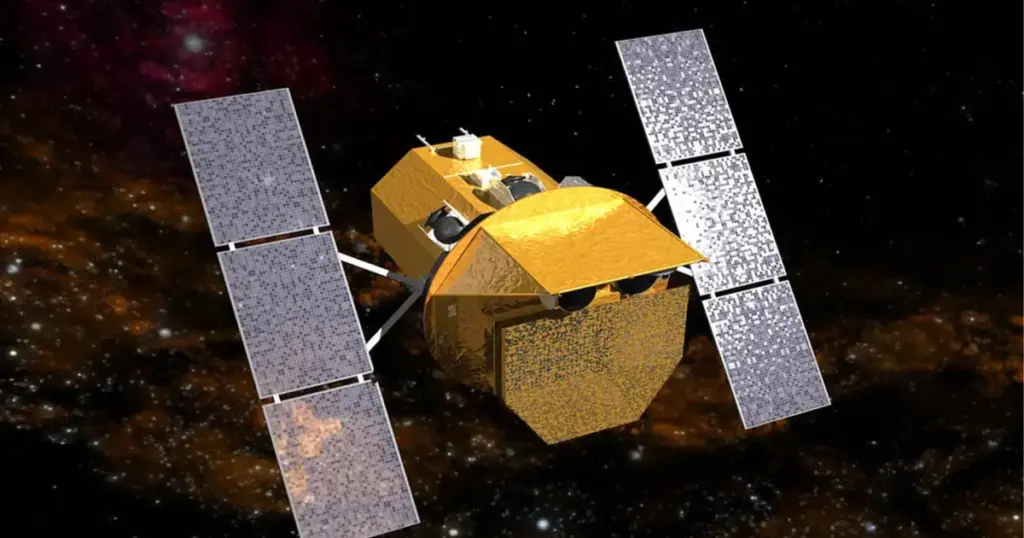
- NASA’s Swift Observatory re-entered Earth’s atmosphere, concluding its nearly 22-year mission.
- The 1.5-ton spacecraft largely burned up, but some fragments may have reached the planet’s surface.
- The U.S. Space Force estimated the probability of debris causing harm at one in 2100.
Swift Observatory Completes Mission with Earth Re-entry
NASA’s Swift Observatory, a truck-sized space telescope, has concluded its nearly 22-year operational lifespan by re-entering Earth’s atmosphere. The U.S. Armed Forces reported that the observatory initiated its re-entry in the early hours of November 4. Attempts to boost the aging space telescope into a higher orbit were unsuccessful, leading to its controlled descent.
Re-entry Details and Debris Assessment
The majority of the 1.5-ton apparatus was expected to burn up during atmospheric re-entry. However, some fragments may have survived and reached Earth’s surface. NASA had projected the re-entry to occur around 3:30 AM ET, with an estimated margin of plus or minus 11 hours.
The U.S. Space Force assessed the likelihood of debris causing harm to be approximately one in 2100. This event marks the end of a long and significant mission for the observatory, which was launched almost 22 years ago to monitor the universe.
The re-entry of spacecraft upon mission completion is a standard practice in space operations. While most components are designed to incinerate upon atmospheric friction, the possibility of fragments reaching the ground remains. Risk assessments, such as those conducted for the Swift Observatory, are crucial for evaluating potential hazards to populations and infrastructure, underscoring that such events very rarely result in damage.


I’ve been following Swift since its early days, and it’s bittersweet to see it go. I remember using some of its public data for a small astronomy project in college, specifically its X-ray and UV observations of gamma-ray bursts. The prompt alerts it provided were incredible for coordinating multi-wavelength follow-ups. What always impressed me was its rapid slewing capability – it could pivot to a new target in minutes, which was revolutionary. The only real challenge was sometimes dealing with data calibration across its different instruments, but that’s typical for multi-band observatories. For anyone looking into past GRB events, Swift’s archive is a goldmine!