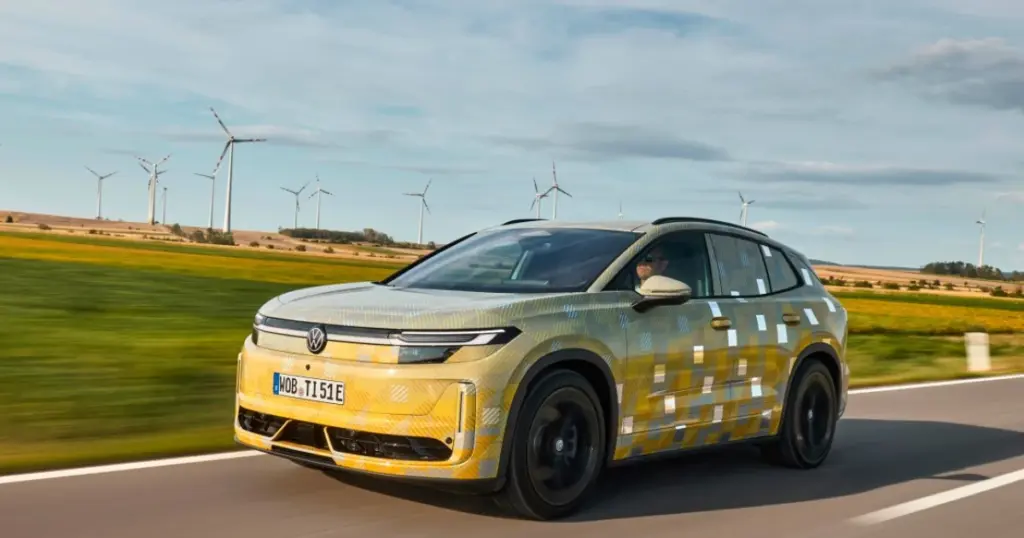
- In a widely anticipated announcement, Volkswagen has confirmed its decision to replace the recently retired ID.4 crossover with the upcoming all-electric ID.Tiguan.
- Over the past five years, Volkswagen has dedicated significant efforts to define its position in the rapidly transforming automotive landscape.
Volkswagen Prioritizes Familiar Nameplates for Electric Vehicle Market
In a widely anticipated announcement, Volkswagen has confirmed its decision to replace the recently retired ID.4 crossover with the upcoming all-electric ID.Tiguan. This strategic move by the German automaker acknowledges that well-established and recognizable nameplates, such as Tiguan, are likely to be a more straightforward sell to consumers, particularly within the rapidly expanding electric vehicle (EV) market.
Volkswagen’s Evolving EV Market Strategy
Over the past five years, Volkswagen has dedicated significant efforts to define its position in the rapidly transforming automotive landscape. Initially, the ID electric vehicle lineup was presented as a distinct brand. However, a strategic shift is evident this year as a crucial crossover in this segment will now carry the ID.Tiguan designation. This change signals a clear intent to leverage the popularity and legacy of the Tiguan name under new market conditions, aiming to accelerate consumer adoption of its electric offerings.



Volkswagen’s pivot to leveraging established nameplates like Tiguan for its EV lineup, moving away from the distinct ID.X nomenclature, is a pragmatic response to market resistance. This acknowledges that brand equity and familiarity can significantly de-risk consumer adoption, especially for a segment where the powertrain itself is a novel concept for many. The ID.Tiguan’s success will likely hinge on whether it can maintain the core utility and design cues that made the ICE Tiguan a bestseller, while integrating competitive range and charging infrastructure.