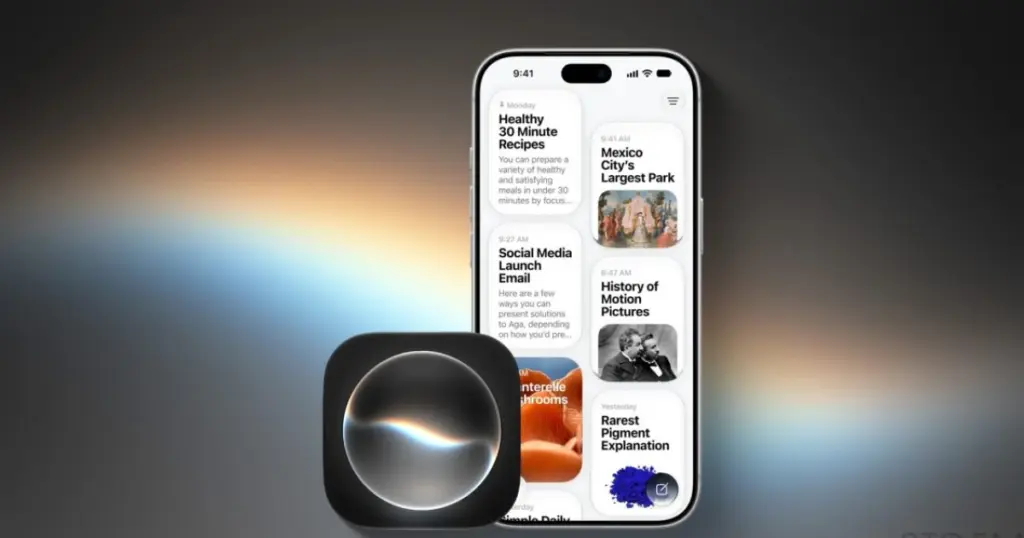
- Apple is aggressively pursuing the transformation of Siri into a more “agentic” system, capable of proactively taking actions.
- CEO John Ternus is reportedly pressuring Craig Federighi to accelerate Siri’s roadmap to compete with OpenAI’s Dots and Meta’s Muse.
- The company is exploring new engineering pipelines to enable faster development and close the gap with AI agent competitors.
Apple’s Push for an “Agentic” Siri
Apple is reportedly accelerating its efforts to evolve Siri into a powerful AI agent, with ambitions to introduce more advanced capabilities as early as next year. Following the release of its personalized Siri in iOS 27, which met goals set in 2024, the company is now focusing on the proactive action features that are becoming a standard among leading AI firms, according to Bloomberg’s Mark Gurman.
Executive Pressure to Accelerate Development
Bloomberg’s Mark Gurman indicates that Apple CEO John Ternus is exerting pressure on Craig Federighi, Senior Vice President of Software Engineering, to expedite the Siri roadmap. The objective is to deliver a robust AI agent that can effectively compete with offerings like OpenAI’s Dots and Meta’s Muse. While Federighi has successfully launched a functional AI version of Siri within a tight timeframe, Apple acknowledges the imperative to keep pace with the rapid advancements of its competitors.
Adopting New Engineering Pipelines
To achieve this ambitious transformation, Apple is experimenting with a new engineering pipeline designed to facilitate faster development cycles. This strategic shift is crucial as the company aims to not only catch up but potentially surpass competitors in the rapidly evolving AI agent landscape. This push aligns with broader industry trends where companies are enhancing AI capabilities, as seen in Apple’s recent strengthening of App Store rules against certain AI applications, signaling a focused approach to AI development and regulation.
The evolution of Siri into an “agentic” system signifies a shift from a reactive assistant to a proactive one, capable of performing complex tasks and automating routines without explicit commands. This will enhance the user experience across Apple devices, making them more intelligent and intuitive. For developers, it opens new avenues for integrating applications with a more advanced Siri, potentially leading to richer and more seamless user interactions.



The reported internal pressure from Ternus on Federighi to accelerate Siri’s agentic capabilities underscores the critical imperative Apple faces in the generative AI race. While iOS 27’s personalized Siri was a foundational step, the market’s expectation for proactive, multi-modal AI agents like OpenAI’s Dots or Meta’s Muse necessitates a rapid architectural overhaul, moving beyond traditional NLP to sophisticated action execution models. The success hinges on their new engineering pipelines to integrate advanced LLM orchestration with device-level context awareness, a complex undertaking.