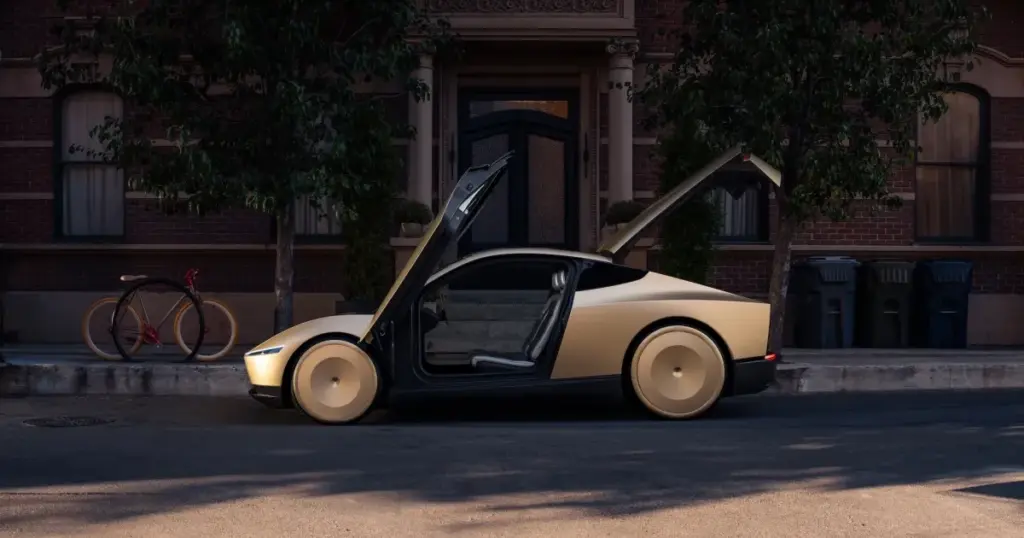
- Tesla intends to start selling its two-seater autonomous Cybercabs to third-party companies by the close of 2024.
- The Cybercab, which lacks a steering wheel and traditional controls, is currently under federal investigation for safety compliance.
- Beginning in Q2 2025, Model Y owners will have the option to integrate their vehicles into Tesla’s robotaxi network to generate income.
Tesla Accelerates Robotaxi Ambitions with Cybercab Launch and Model Y Integration
Tesla has announced plans to commence sales of its fully autonomous, two-seater Cybercab vehicles to external transport companies by the end of 2024. These distinctive gold-hued vehicles, which are designed without a steering wheel or other conventional controls, are set for release even as federal regulators continue investigations into their compliance with vehicle safety standards.
Lars Moravy, Tesla’s Vice President of Engineering, confirmed these ambitious timelines during the company’s third-quarter earnings call. The introduction of the Cybercab is part of a broader strategy to deploy robotaxis across various U.S. cities.
Model Y to Join the Autonomous Fleet
In addition to the Cybercab launch, Tesla has revealed an initiative allowing current Model Y owners to integrate their personal vehicles into Tesla’s proprietary robotaxi network. Starting in the second quarter of 2025, owners will be able to dispatch their Model Ys to operate as autonomous taxis, transporting passengers without a driver. This program represents a significant expansion of the company’s autonomous transportation services.
| Feature | Cybercab | Model Y (Robotaxi Mode) |
|---|---|---|
| Vehicle Type | Autonomous two-seater | Existing personal vehicle, integrated into network |
| Steering Wheel/Pedals | Absent | Present (but not driver-operated) |
| Availability/Integration | End of 2024 | Q2 2025 |
| Target Audience | Third-party transport companies | Model Y owners |
The impending launch of the Cybercab and the integration of Model Ys into the robotaxi network signal Tesla’s aggressive push to dominate the autonomous ride-sharing market. For consumers, this could translate into new, potentially more affordable, and convenient taxi options. For Model Y owners, it offers a potential new revenue stream. However, ongoing regulatory scrutiny regarding the safety of fully autonomous systems without traditional controls will be crucial in determining the pace and scale of deployment.


The idea of Cybercabs and Model Ys joining a robotaxi fleet is really interesting. I’m curious about the specific safety protocols and liabilities when there’s no driver, especially with the ongoing federal investigations mentioned. How will Tesla address potential incidents, and what kind of insurance models will be in place for both Cybercabs and Model Y owners? It feels like a huge leap for urban transportation, but the details around responsibility are key.