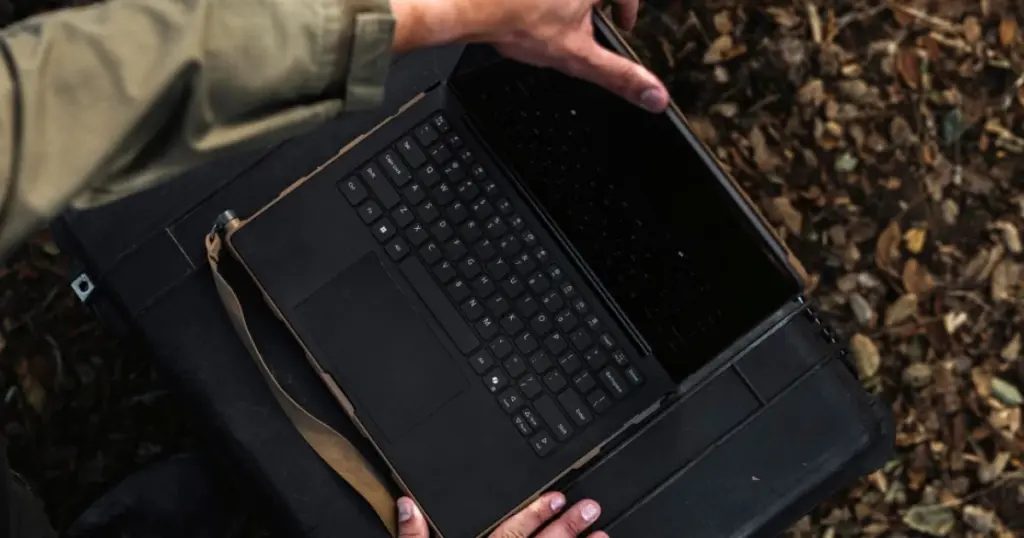
- Defense contractor Anduril and chipmaker Qualcomm have partnered to launch BlueChip, a new line of laptops for the US government and defense sectors.
- The first ruggedized prototypes, powered by Arm-based Snapdragon X Series chips, are expected to take orders in 2027.
- The long-term goal is to establish a fully domestic US supply chain for all components, enhancing national security and supply chain resilience.
Anduril, a defense contractor known for its military drones, and chipmaker Qualcomm have announced a strategic partnership to develop and manufacture a new line of laptops named BlueChip. These devices are specifically designed for government, defense, emergency services, and other critical users, with a core focus on establishing an entirely US-based manufacturing and supply chain.
Reshoring Computer Manufacturing
Palmer Luckey, founder of Anduril, has committed to bringing computer manufacturing back to the United States. This initiative extends beyond mere assembly to include the production of every individual component, many of which are currently manufactured exclusively in China. The BlueChip project aims to begin taking orders for its initial models in early 2027.
Technological Foundation and Features
The first BlueChip laptops will utilize Qualcomm’s Snapdragon X Series chips, which handle processing, graphics, and on-device AI capabilities. Functional prototypes already exist, with Anduril stating that 90% of the procurement cost for components in these prototypes comes from suppliers in the U.S. and allied countries. The ultimate objective is to achieve a fully domestic supply chain.
Luckey emphasized Anduril’s commitment to sourcing materials and technologies available within the US, including metals for external casings, battery technology, and even screen glass. “Other companies might design their computers in the U.S., Anduril makes them here,” Luckey stated, highlighting the company’s manufacturing philosophy.
Phased Approach and Challenges
Anduril acknowledges that building a 100% domestic supply chain presents significant challenges, as components such as circuit boards, displays, and batteries are still largely produced overseas. The BlueChip initiative will adopt a phased approach:
- Expanding Domestic Sourcing and Manufacturing: The initial phase will focus on increasing the proportion of US-made components.
- Eliminating Reliance on Foreign Suppliers: An intermediate phase aiming to minimize imported parts.
- Establishing an End-to-End American Supply Chain: The long-term goal of achieving complete domestic production for all components.
These efforts align with the White House’s push to revitalize semiconductor manufacturing in the US, leading to the construction of major fabrication plants like TSMC Arizona and Samsung’s Taylor, Texas site. Taiwan’s plans to support smaller companies crucial to TSMC’s supply chain by funding industrial parks in the U.S. are also expected to benefit BlueChip by facilitating the sourcing of necessary parts that would otherwise require international procurement.
While these US-made laptops are projected to cost approximately 20% more than comparable devices, Anduril believes that critical sectors-including government, defense, first responders, and public safety-will be willing to invest more to ensure the security and sovereignty of their computer systems. This focus on security is increasingly vital, especially in light of recent data breaches affecting government entities.
The launch of BlueChip by Anduril and Qualcomm signifies a pivotal move towards strengthening US technological independence in computer manufacturing. For government and defense organizations, this translates to access to more secure and auditable computing platforms with a fully transparent supply chain. For the broader tech industry, it could set a precedent for reshoring component manufacturing and fostering new domestic job creation, albeit with the potential for higher final product costs.


This BlueChip initiative sounds really promising for national security. I’m curious about the specific challenges in achieving a fully domestic supply chain for components like display panels and high-density circuit boards – are there any existing US manufacturers that could scale up, or would new facilities need to be built from scratch? Also, how will the cost compare to foreign-made equivalents, especially for government budgets?