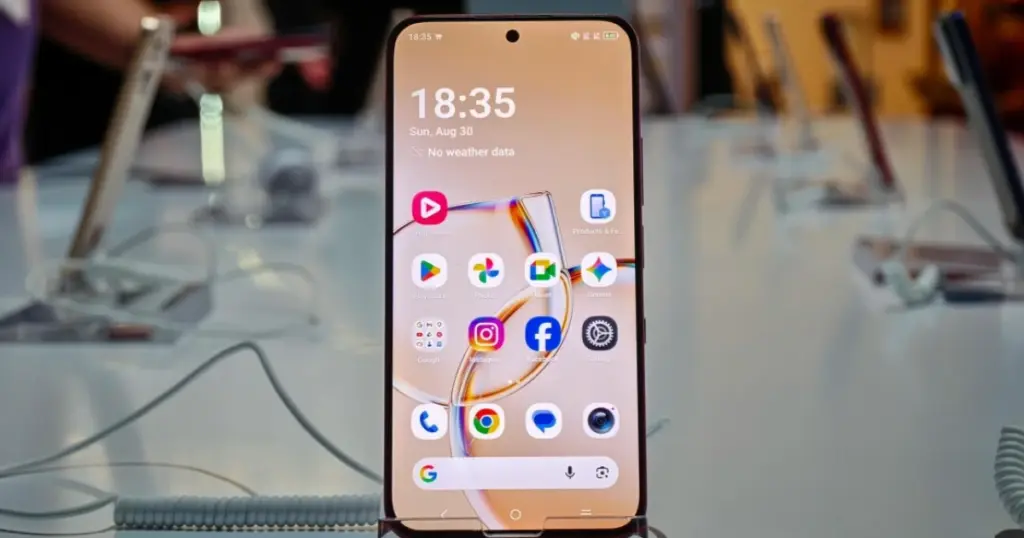
- TCL has unveiled its latest smartphone, the TCL P80 Ultra, marking a significant advancement in mobile display technology.
- A core feature of the TCL P80 Ultra is its ability to switch into a low-power, monochromatic display mode that replicates the visual experience of paper.
- Beyond its innovative display, the flagship TCL P80 Ultra is equipped with advanced photographic capabilities.
TCL P80 Ultra: A New Era for Paper-like OLED Displays
TCL has unveiled its latest smartphone, the TCL P80 Ultra, marking a significant advancement in mobile display technology. This device is notable for being the first to integrate Nxtpaper technology, which mimics the characteristics of e-paper, with an OLED panel, a departure from its predecessors that utilized LCD screens.
Innovative Display and Technical Specifications
- Display Type: 6.83-inch OLED screen.
- Resolution: 1.5K.
- Refresh Rate: 120 Hz.
- Peak Brightness: 3200 cd/m2.
- Color Gamut: 100% DCI-P3.
A core feature of the TCL P80 Ultra is its ability to switch into a low-power, monochromatic display mode that replicates the visual experience of paper. This mode is ideal for reading and minimizing distractions. TCL asserts that the incorporation of Nxtpaper, combined with what the company claims is one of the market’s best anti-glare coatings, positions this OLED display as superior to those found in certain other flagship phones.
Additional Features of the P80 Ultra
Beyond its innovative display, the flagship TCL P80 Ultra is equipped with advanced photographic capabilities. The smartphone includes a 50-megapixel periscopic telephoto lens, enhancing its functionality and appeal for users who prioritize high-quality mobile photography.

I’ve been using TCL’s Nxtpaper tech on my tablet for a while now, and it’s a game-changer for long reading sessions. The paper-like texture really does reduce eye strain, which is huge for me. My only gripe is that in brighter environments, the anti-glare can sometimes make colors look a bit muted compared to a standard glossy OLED. For the P80 Ultra, I’m curious if the OLED panel will fix that brightness trade-off. A tip for new users: try adjusting the Nxtpaper intensity; sometimes a lower setting feels more natural.