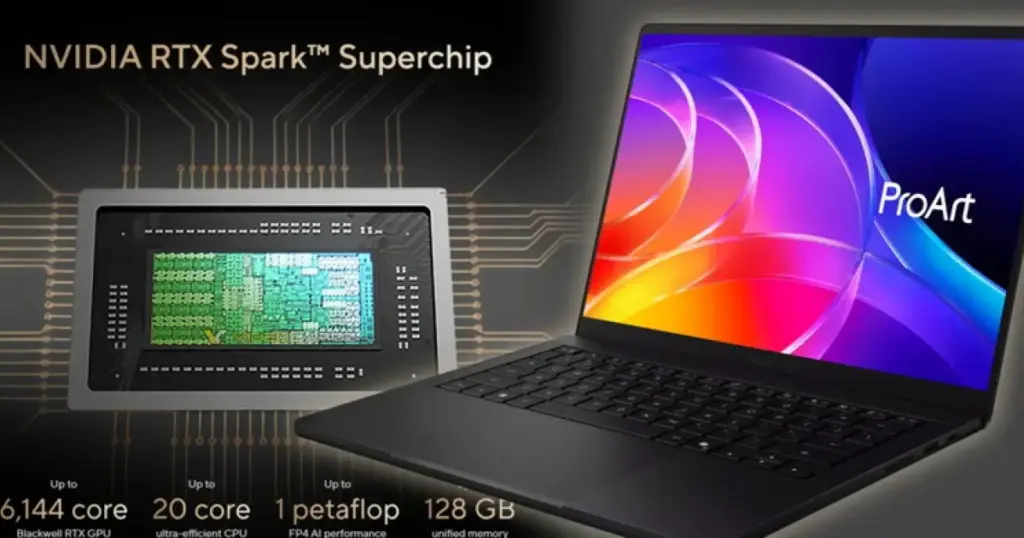
- Asus has officially unveiled its new lineup of ProArt P14 and ProArt P16 laptops, alongside the GR1X mini-PC, at the international IFA 2026 exhibition.
- The 14-inch ProArt P14 laptop, initially teased at Computex 2026, now has its planned memory and storage configurations confirmed by the manufacturer.
- Complementing the ProArt P14, Asus also introduced the larger ProArt P16 model, which will similarly benefit from the advanced capabilities of the Nvidia RTX Spark platform.
Asus Introduces Next-Gen ProArt P14 and P16 with Nvidia RTX Spark
Asus has officially unveiled its new lineup of ProArt P14 and ProArt P16 laptops, alongside the GR1X mini-PC, at the international IFA 2026 exhibition. These devices are among the first Windows-based solutions to leverage Nvidia’s innovative RTX Spark Arm platform, specifically engineered for AI-driven content creation workloads.
Detailed Specifications for ProArt P14 Confirmed
The 14-inch ProArt P14 laptop, initially teased at Computex 2026, now has its planned memory and storage configurations confirmed by the manufacturer. This compact powerhouse is expected to offer robust options for professionals handling demanding applications, particularly those in the realm of AI content generation.
ProArt P16 and GR1X Mini-PC for Content Creators
Complementing the ProArt P14, Asus also introduced the larger ProArt P16 model, which will similarly benefit from the advanced capabilities of the Nvidia RTX Spark platform. The announcement also included the GR1X mini-PC, expanding Asus’s ecosystem of devices tailored for professionals engaged in AI and multimedia content creation.



While the integration of Nvidia’s RTX Spark Arm platform sounds promising for AI content creation, I’m curious about the real-world performance uplift compared to existing x86 solutions, especially given potential software compatibility challenges. The article highlights the innovation, but I wonder if the significant investment in new hardware will truly translate to a proportional boost in efficiency for all professional workflows, or if it’s more niche. We’ve seen ‘next-gen’ platforms before with high expectations that didn’t always fully materialize across the board.