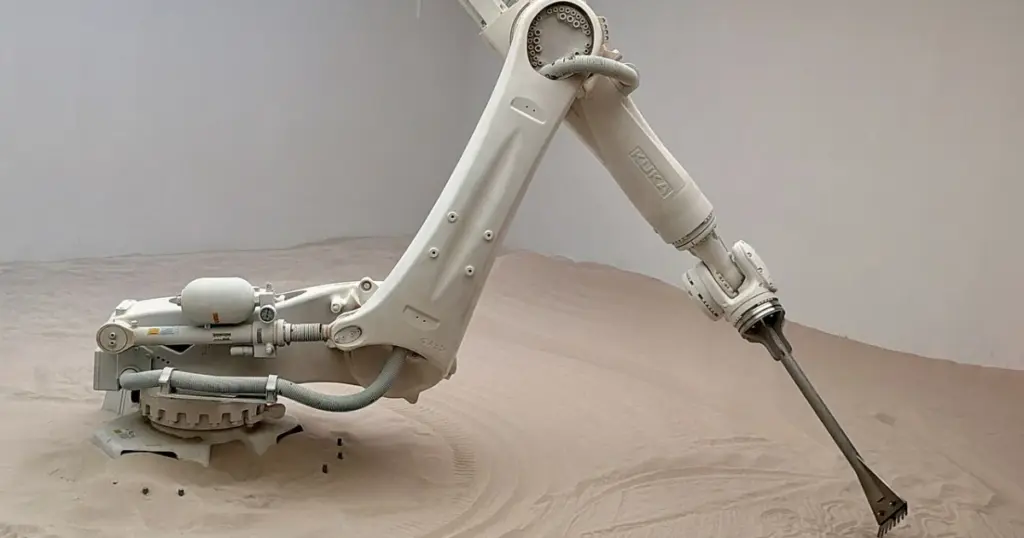
- Every technological breakthrough is accompanied by a wave of anxious predictions about mass unemployment.
- Let’s try to understand this without panic and without naive optimism – what do real data and the logic of ongoing changes tell us?
- Previous waves of automation primarily affected routine physical and mechanical labor – assembly line production, calculations, data processing according to strict algorithms.
Every technological breakthrough is accompanied by a wave of anxious predictions about mass unemployment. The Industrial Revolution, the advent of computers, production automation – similar fears were voiced each time, and each time reality proved more complex than simple predictions. The development of generative artificial intelligence is causing a similar wave of concern, but this time it’s not just about physical labor, but about cognitive, creative, and analytical work.
Let’s try to understand this without panic and without naive optimism – what do real data and the logic of ongoing changes tell us?
Why This Time Is Truly Different
Previous waves of automation primarily affected routine physical and mechanical labor – assembly line production, calculations, data processing according to strict algorithms. Large language models and generative AI are, for the first time, extensively impacting areas long considered exclusively human: text writing, image creation, programming, complex data analysis, and even elements of creative thinking.
This does not mean the automatic replacement of humans wherever thinking was previously required – but it does mean that the area of potential automation has expanded significantly beyond familiar boundaries.
Professions and Tasks with High Transformation Risk
Basic Copywriting and Template Content
Writing simple product descriptions, templated social media posts, routine news articles following a standard structure – neural networks already perform these tasks at an acceptable quality level in seconds. The demand for a “person who simply writes texts according to a template” is already decreasing.
Basic Customer Support
Standard customer support inquiries – order status, simple instructions, frequently asked questions – are increasingly handled by AI-powered chatbots without human operator involvement.
Junior Programming of Template Tasks
Writing simple, repetitive code – typical functions, basic layout, standard scripts – AI tools like GitHub Copilot perform a significant portion of this work, reducing the need for a large staff of junior developers for routine tasks.
Basic Text Translation
Machine translation has become so high-quality for most language pairs that professional translators now more often engage in editing machine translations (post-editing) rather than translating from scratch – this has already changed the economics of the profession.
Data Analysis Using Standard Templates
Compiling typical reports, basic table analysis, generating standard data presentations – tasks that AI performs increasingly faster and more accurately.
Transcription and Basic Decryption
Converting audio to text is almost entirely automated by modern tools with high accuracy.
Professions That Will Remain Resilient – And Why
Professions Requiring Physical Presence and Real-World Manipulation
Plumbers, electricians, builders, mechanics – despite advances in robotics, physical work in unpredictable, diverse real-world conditions remains extremely difficult to automate. A robot that can equally well fix a pipe in an old Soviet apartment and a new building is technologically and economically unattainable for now.
Professions Based on Deep Human Contact and Trust
Doctors (especially in diagnosis through personal contact and decision-making considering the patient’s unique context), psychotherapists, social workers – these professions require empathy, trust, and human presence that cannot be replaced by an algorithm, even a very advanced one.
Professions Requiring Complex, Multi-Contextual Decision-Making
Top managers, strategists, diplomats – roles where decisions are made based on a vast number of poorly formalized factors, political nuances, personal relationships, and intuition accumulated over years of experience.
High-Level Creative Professions
AI can generate an image or text, but creating a truly original, culturally significant work of art capable of evoking a deep emotional response and forming a new direction in culture – this remains the prerogative of humans, at least in the foreseeable future.
Professions in Child Rearing and Development
Educators, elementary school teachers, coaches – working with children requires patience, adaptability, emotional intelligence, and human presence that cannot be replaced by technology, even if individual educational tools assist in the process.
Highly Specialized Craft and Creative Skills
Art restorers, masters of unique crafts, high-level chefs – work where value is created precisely by human skill, history, and individual approach.
Intermediate Category: Professions That Transform, Not Disappear
Most professions will not disappear entirely but will change their nature of work. Designers will work more with AI tools to generate options, rather than drawing everything manually from scratch. Lawyers will use AI for initial document analysis, focusing on strategy and negotiations. Marketers will manage AI tools for content generation, focusing on strategy and creative concepts.
This means that the skill of effectively working with AI tools becomes part of professional competence in almost any field – not as a replacement for the profession, but as a new necessary skill within it.
What to Do to Remain In-Demand
Develop Skills That Complement AI, Not Compete With It
The ability to formulate tasks for AI, critically evaluate and edit results, and combine AI insights with specialized expertise – these meta-skills become more valuable than simply performing routine tasks.
Deepen Human Competencies
Emotional intelligence, leadership, the ability for complex negotiations, creative thinking beyond templates – these qualities become relatively more valuable as routine tasks are automated.
Continuous Learning as the Norm, Not the Exception
The speed of change requires regular skill updates. Professionals who treat learning as a continuous process, rather than a one-time event at the beginning of their career, find themselves in a significantly better position.
Conclusion
Artificial intelligence is indeed changing the labor market, and these changes are real, not imagined. But the history of technological revolutions shows that the complete disappearance of professions happens less often than their transformation. Tasks within professions change, skill requirements grow, but human involvement in complex, contextual, emotionally rich, and physically unpredictable tasks remains irreplaceable for the foreseeable future.
The best strategy is not panic or denial, but active adoption of new tools and conscious development of those qualities that remain exclusively human.
| Key Aspect / Direction | Core Mechanism & Essence | Practical Recommendation |
|---|---|---|
| Why This Time Is Truly Different | Previous waves of automation primarily affected routine physical and mechanical labor – assembly line production, calculations, data processing… | Large language models and generative AI are, for the first time, extensively impacting areas long considered exclusively human:… |
| Basic Copywriting and Template Content | Writing simple product descriptions, templated social media posts, routine news articles following a standard structure – neural networks… | The demand for a “person who simply writes texts according to a template” is already decreasing. |
| Basic Customer Support | Standard customer support inquiries – order status, simple instructions, frequently asked questions – are increasingly handled by AI-powered… | Verify configuration and apply security best practices. |
| Junior Programming of Template Tasks | Writing simple, repetitive code – typical functions, basic layout, standard scripts – AI tools like GitHub Copilot perform… | Verify configuration and apply security best practices. |
Artificial intelligence is indeed changing the labor market, and these changes are real, not imagined. But the history of technological revolutions shows that the complete disappearance of professions happens less often than their transformation. Tasks within professions change, skill requirements grow, but human involvement in…
Frequently Asked Questions (FAQ)
Why This Time Is Truly Different?
Previous waves of automation primarily affected routine physical and mechanical labor – assembly line production, calculations, data processing according to strict algorithms. Large language models and generative AI are, for the first time, extensively impacting areas long considered exclusively human: text writing,…
What should you know about basic Copywriting and Template Content?
Writing simple product descriptions, templated social media posts, routine news articles following a standard structure – neural networks already perform these tasks at an acceptable quality level in seconds. The demand for a “person who simply writes texts according to a template”…
What should you know about basic Customer Support?
Standard customer support inquiries – order status, simple instructions, frequently asked questions – are increasingly handled by AI-powered chatbots without human operator involvement.

Очень интересная статья! Особенно зацепила мысль о том, что это время действительно отличается от предыдущих волн автоматизации. Я вот думаю, а как быть с профессиями, где важна не только креативность, но и глубокое эмоциональное взаимодействие, например, в психологии или коучинге? И насколько быстро ИИ сможет адаптироваться к постоянно меняющимся социальным и культурным контекстам, что критично для многих творческих задач? Хотелось бы обсудить эти аспекты.