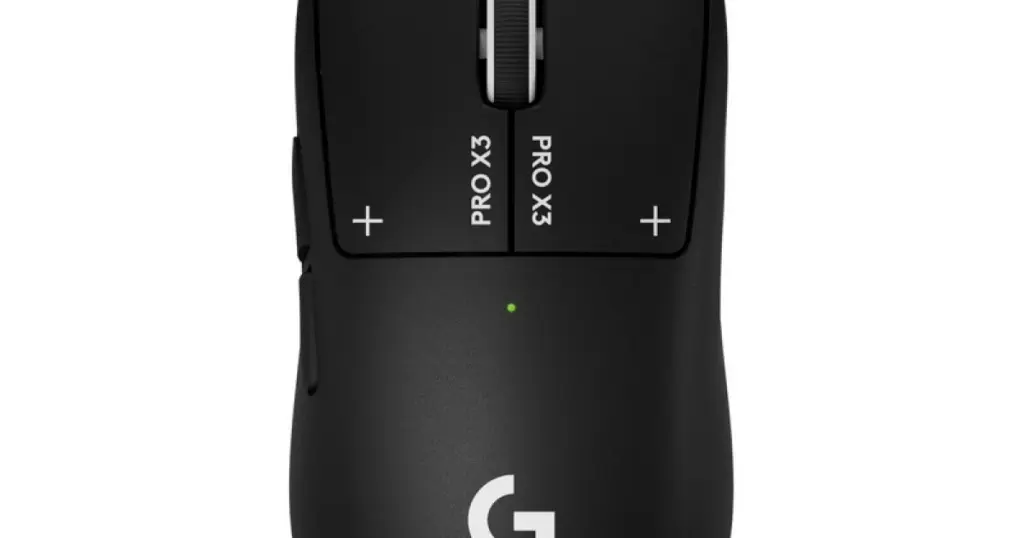
Logitech Expands PRO Series with New Gaming Peripherals
Logitech has officially announced three new flagship peripherals aimed at professional gamers: the Logitech G Pro X3 Superstrike wireless gaming mouse, the Logitech G Pro X2 Rapid wired gaming keyboard, and the Logitech G Pro X3 Lightspeed wireless gaming headset. These new additions are set to reinforce the brand’s position in the high-performance gaming accessories market.
Logitech G Pro X3 Superstrike Mouse: Next-Generation Precision
The flagship Logitech G Pro X3 Superstrike mouse is the successor to the popular G Pro X2 Superstrike model. It features an upgraded sensor, delivering enhanced precision and tracking speed. A significant improvement is its extended battery life, offering up to 135 hours of use on a single charge, making it one of the longest-lasting wireless gaming mice available. The mouse also incorporates contactless switches, improving durability and responsiveness.
Logitech G Pro X2 Rapid Keyboard: Innovative Control
The wired gaming keyboard, Logitech G Pro X2 Rapid, distinguishes itself with analog Hall Effect switches. This technology provides a unique level of control and keypress accuracy, allowing for variable actuation force. An integrated OLED display further enhances the user experience, capable of showing various useful information such as profile settings, system parameters, or in-game data.
Logitech G Pro X3 Lightspeed Headset: Uncompromised Audio
Designed for high-quality audio and comfort during extended gaming sessions, the Logitech G Pro X3 Lightspeed wireless gaming headset leverages Logitech’s proprietary Lightspeed wireless technology for minimal latency. The headset boasts up to 70 hours of battery life on a single charge, ensuring uninterrupted immersion in gameplay.
While the new Logitech G Pro series sounds impressive on paper, I do wonder about the real-world impact of some of these upgrades. For instance, the ‘contactless switches’ in the mouse, while durable, might introduce a different tactile feel that some pro players could find less precise than traditional mechanical switches. Also, the extended battery life, while convenient, often comes with a weight penalty. I’d be curious to see how these translate into actual competitive performance, especially given the premium pricing these ‘pro’ peripherals usually command. Are the advancements truly game-changing, or more incremental improvements for a niche market?