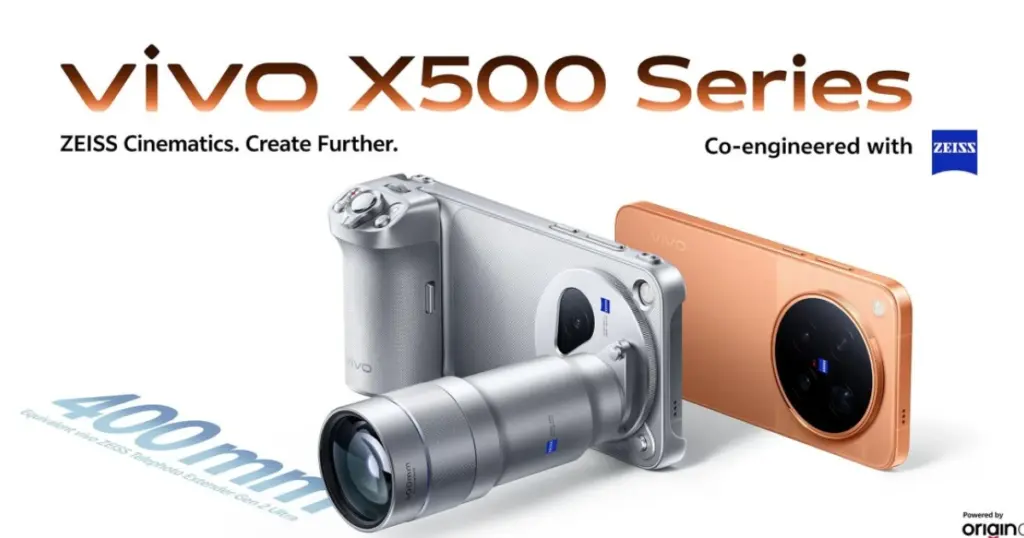
Vivo X500 Pro Max: Setting New Benchmarks in Mobile Imaging and Performance
Vivo has officially launched its new X500 flagship smartphone series in China, with a steadfast focus on advanced photography capabilities, a hallmark of the company’s premium offerings. The lineup includes the X500 Pro and the groundbreaking X500 Pro Max.
Pioneering Camera Technology and Robust Performance
- Dynamic Range Excellence: The X500 Pro Max introduces a new tier in Vivo’s lineup, becoming the first smartphone to feature a sensor with an impressive 17 stops of dynamic range. This significant advancement is a result of collaboration with Sony and the integration of new silicon components.
- High-Speed Video Recording: Both devices support 4K video recording at 240 frames per second, enabling stunning slow-motion capture with exceptional detail.
- MediaTek Dimensity Power: The X500 Pro and X500 Pro Max are powered by MediaTek’s latest Dimensity 9600 Pro processor. According to MediaTek, this new chip delivers a 17% increase in single-core performance and a 15% boost in multi-core performance compared to its predecessor, while also reducing peak power consumption by 61%.
- Vivo X500 Model: The standard Vivo X500 model also debuted, featuring a Dimensity 9600M processor, Zeiss cameras, and a substantial 7500 mAh battery.
Flagship Innovation
The introduction of the X500 series underscores Vivo’s commitment to leading the camera-centric smartphone market. By integrating powerful processors with innovative imaging sensors, Vivo is delivering capabilities previously associated with professional photography equipment, ensuring superior performance and image quality for users.
While 17 stops of dynamic range and 4K240 slo-mo sound impressive on paper, I’m curious about the real-world utility and potential trade-offs. Such high specs often come with significant processing demands, leading to questions about sustained performance, battery life under heavy use, and potential heat management issues. Also, how much of this advanced dynamic range is actually perceptible and useful for the average user, or is it more of a marketing spec?