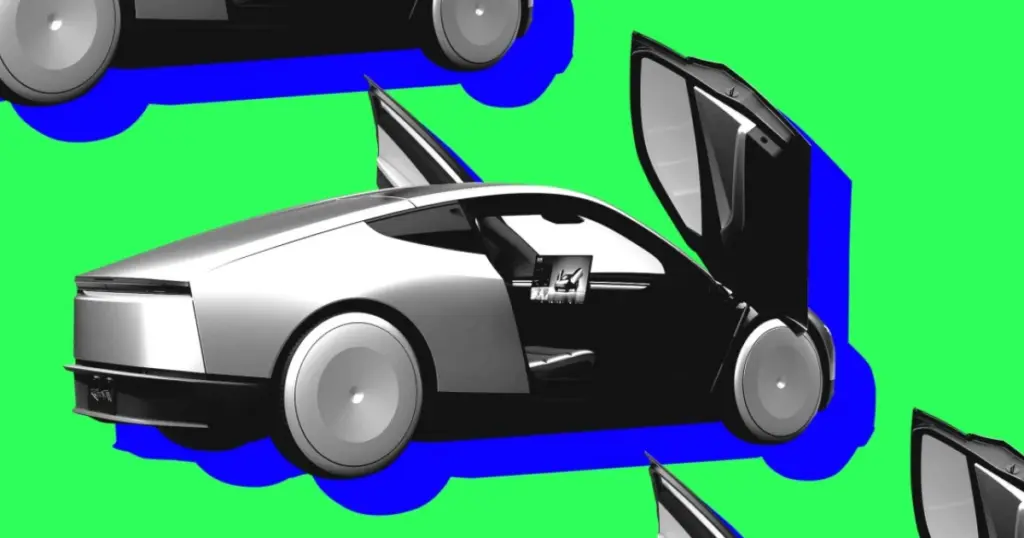
Tesla Cybercab Debut: A New Era for Autonomous Transport
Tesla, under the leadership of Elon Musk, has officially launched its highly anticipated Cybercab robotaxi service in Austin, Texas. This event marks a significant stride in realizing Musk’s ambitious vision for integrating autonomous vehicles and artificial intelligence into daily life. The launch, which took place at a private, closed-door event, ushers in a new chapter for the futuristic, steering wheel-free two-seaters.
Features and Philosophy of the Cybercab
The Cybercab model, first unveiled nearly two years ago, stands out with its distinctive design, featuring a gold-tinted body and gull-wing doors. The absence of a steering wheel underscores the complete autonomy of these vehicles, designed to operate as driverless taxis. This move culminates years of Musk’s pronouncements about the imminent arrival of self-driving cars, on which he has staked the future of his company, encompassing developments in AI and humanoid robots.
Implications for Tesla and the Industry
The launch of the Cybercab represents a pivotal moment for Tesla as the company operationalizes its innovative autonomous driving technology. It serves not only as a test of Musk’s heterodox robotaxi philosophy but also as a demonstration of advancements in artificial intelligence and robotics. The introduction of public rides in Austin will provide an opportunity to assess the practical applicability and reliability of the new system.
I’ve been following the Cybercab development closely, and it’s exciting to see it finally launch in Austin. I’m a big proponent of autonomous tech, and while the concept is fantastic for urban mobility, I’m curious about its performance in varied weather and unexpected road conditions. My own experience with current FSD beta has shown it excels on highways but still struggles with complex city intersections. A practical tip for anyone using it: always be ready to disengage, especially during unprotected left turns. I’m hopeful Cybercab refines this further.