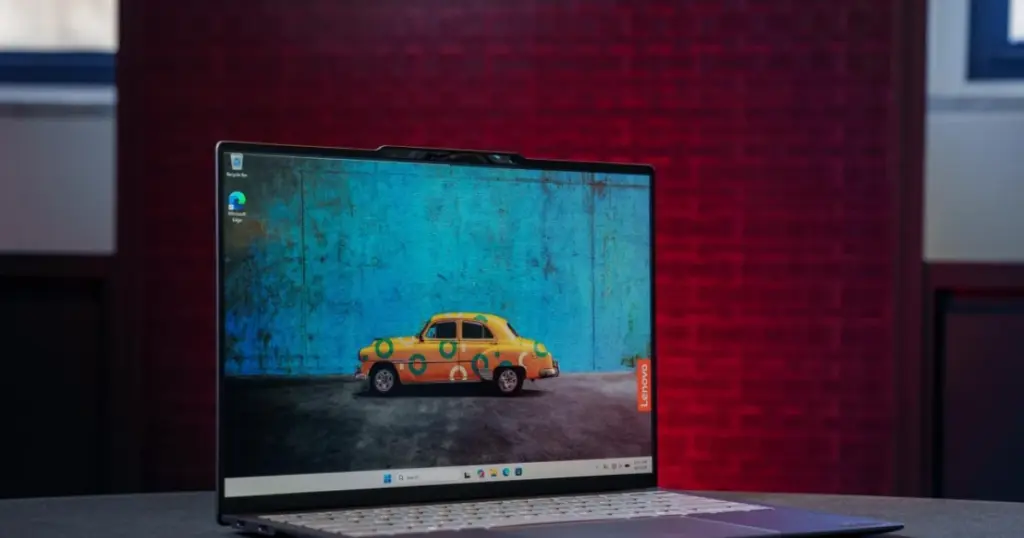
Lenovo’s Vision for the Future: Ultra-Thin Laptops and Expanding Displays at IFA 2026
At IFA 2026, Lenovo has unveiled two groundbreaking concept laptops that offer a glimpse into the future of mobile computing. These innovations include an exceptionally thin model featuring a novel cooling system and a business laptop with an expandable display, highlighting the company’s commitment to pushing boundaries in design and functionality.
Project AeroBlade: Fanless Cooling for Unprecedented Thinness
One of the key announcements is the
Project AeroBlade concept laptop. This 14-inch device stands out for its remarkable slimness, measuring less than 10mm thick and weighing under 1.8 pounds (830g). To put this into perspective, current ThinkPad X1 Carbon models are approximately 14mm at their thickest point. The primary innovation in AeroBlade is its use of
solid-state cooling, replacing traditional fans. This technology not only allows for a radical reduction in the device’s dimensions but also ensures silent operation while maintaining efficient heat dissipation. The absence of moving parts also enhances the laptop’s reliability and durability.
ThinkBook Project Swan: The Rollable Screen for Enhanced Productivity
The second concept introduced is the
ThinkBook Project Swan. This business laptop features a revolutionary
rollable screen that can expand horizontally from 14 to 17 inches. Rollable screen technology is not entirely new for Lenovo, as the company has previously showcased several concepts and even launched a commercial product last year. The ThinkBook Project Swan continues this trend, offering users increased flexibility and an expanded workspace without increasing the device’s physical footprint when closed.
Both Project AeroBlade and ThinkBook Project Swan underscore Lenovo’s strategy to explore new form factors and leverage advanced technologies to create more powerful, compact, and user-friendly devices for consumers and businesses alike.
The AeroBlade’s solid-state cooling sounds incredibly promising for achieving such thinness without thermal throttling. I’m curious if this technology has any limitations regarding sustained high-performance tasks, or if it’s primarily optimized for typical ultrabook workloads. Also, with the ThinkBook Project Swan, how durable are these rollable screens in a real-world, business travel scenario? I’d love to hear more about the expected lifespan and resistance to wear and tear.